

Understanding what a logistics company does is essential for businesses tackling complex supply chains and global shipping demands. A modern logistics partner manages far more than simply moving cargo from point A to point B. They orchestrate every moving part of freight transportation, including carrier matching, route planning, documentation, and real-time tracking.
We understand that managing freight operations while running a growing business can feel overwhelming. That is why we provide dedicated logistics support, connecting shippers with vetted carriers and industry expertise that streamlines the entire freight journey from pickup to final delivery.
What Does a Logistics Company Do in Modern Supply Chains
A logistics company coordinates the complete movement of goods across supply chains by managing carriers, routes, documentation, warehousing, and communication between all parties involved. Rather than focusing on a single shipment, logistics providers oversee the entire freight journey to ensure that goods arrive on time and within budget. They serve as strategic partners who reduce complexity while improving operational efficiency.
Answering the question of what a logistics company does requires looking at their role as coordinators, communicators, and problem solvers. We work closely with shippers to understand their freight profiles, delivery windows, and equipment requirements before matching them with qualified motor carriers.
Coordinating dependable LTL shipping services allows businesses to consolidate smaller shipments cost-effectively while maintaining reliable delivery schedules across the country.
Core Functions of Freight Brokerage and Carrier Matching
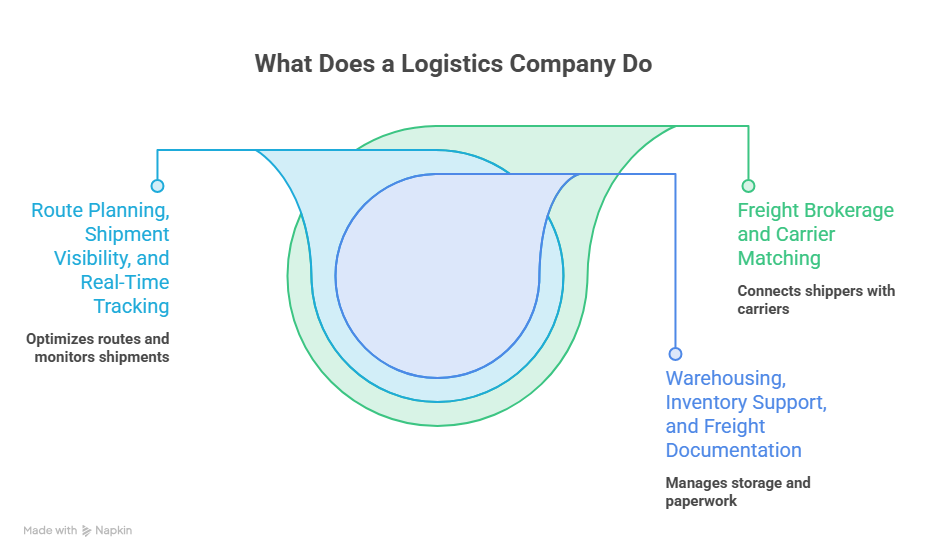
Freight brokerage connects shippers with qualified trucking companies that have the right equipment and capacity to safely move each shipment. Rather than owning fleets, freight brokers develop relationships with vetted carriers across the country and coordinate transportation based on specific shipment requirements. This model provides shippers with far greater flexibility than working with a single carrier directly.
Effective brokerage involves much more than simply making phone calls to secure trucks.
- Screening carrier operating authority, safety scores, and cargo insurance certificates before every booking.
- Matching freight dimensions and weight to the appropriate trailer type for safe transit.
- Negotiating fair market rates that reflect current capacity conditions and lane demand.
- Coordinating pickup and delivery appointments to align with warehouse operating hours.
Understanding what a logistics company does also involves recognizing how brokers handle exceptions when unexpected challenges arise. We proactively communicate with drivers and shippers throughout every mile of transit to resolve issues before they become costly disruptions.
Route Planning, Shipment Visibility, and Real-Time Tracking
Professional logistics providers design optimized transit routes and deliver continuous shipment visibility so shippers always know exactly where their cargo is located. Route planning involves analyzing weather patterns, traffic congestion, fuel costs, and driver hours of service to select the most efficient path from origin to destination.
Modern shipment visibility depends on integrating tracking technology with proactive communication. Consulting freight-flow and supply-chain indicators from the Bureau of Transportation Statistics can help logistics teams assess transportation activity, capacity conditions, and freight movement trends when planning network operations.
Real-time updates allow receivers to prepare loading docks efficiently and adjust warehouse staffing to match arrival windows. When shippers wonder what a logistics company does to protect delivery timelines, the answer lies in this continuous monitoring and rapid response coordination.
Warehousing, Inventory Support, and Freight Documentation
Comprehensive logistics providers handle warehousing, inventory management, and complete freight documentation to keep supply chains moving without gaps. Storing goods strategically near distribution hubs reduces last-mile shipping costs and improves customer response times. Managing accurate paperwork prevents customs holdups and ensures legal compliance across state and international borders.
Freight documentation requires precision and industry knowledge.
- Bills of lading capture cargo details, pickup locations, and consignee information for legal transfer of custody.
- Commercial invoices and packing lists confirm shipment contents and value for accounting purposes.
- Oversize and overweight permits ensure legal highway travel for cargo exceeding standard dimensions.
For shippers moving heavy or irregular cargo, coordinating dependable heavy equipment transport requires specialized documentation and permitting expertise. We manage every paperwork detail so your operations team can focus on core business priorities.
Main Types of Logistics Providers and Service Models
Businesses can choose from several logistics service models, including freight brokers, freight forwarders, and third-party logistics providers, depending on their operational needs. Each model offers distinct advantages based on shipment volume, geographic coverage, and complexity requirements.
Selecting the right logistics partner depends on understanding these different service approaches.
- Freight brokers match shippers with qualified carriers without owning trucks or trailers themselves.
- Freight forwarders coordinate international and multimodal shipments, including ocean, air, and rail.
- Third-party logistics providers handle comprehensive functions including warehousing, fulfillment, and daily transport management.
Grasping what a logistics company does across these different models empowers shippers to select partners that align with long-term business goals. Booking dedicated full truckload services through experienced brokers gives large volume shippers exclusive trailer capacity and direct point-to-point transit for predictable delivery timing.
Strategic Value Beyond Transportation Coordination
Logistics providers deliver strategic business value that extends far beyond simply arranging trucks and coordinating deliveries. Experienced coordinators help shippers reduce transportation costs, improve customer satisfaction, and build resilient supply chains that adapt quickly to market changes. This strategic perspective transforms logistics from a routine expense into a competitive advantage.
Long-term logistics partnerships create measurable operational improvements over time. We help our clients standardize shipping procedures, forecast transportation budgets accurately, and identify consolidation opportunities that lower per-unit freight costs.
Recognizing what a logistics company does at the strategic level reveals why so many growing businesses rely on professional freight coordinators rather than managing transportation entirely in-house.
Frequently Asked Questions
What are the 5 P's of logistics?
The 5 P’s of logistics refer to a strategic management framework consisting of Planning, Procurement, Production, Placement, and Performance that guides supply chain operations.
What is 1PL 2PL 3PL 4PL and 5PL logistics?
1PL means a business manages its own logistics, while 2PL uses external transportation or warehousing providers. 3PL outsources broader logistics operations, 4PL coordinates multiple logistics providers and supply chain functions, and 5PL uses technology to manage complex supply networks.
How is a freight broker different from a freight forwarder?
A freight broker matches shippers with domestic trucking carriers, while a freight forwarder coordinates international multimodal shipments involving ocean, air, and rail transport.
How does hiring a logistics company reduce shipping costs?
A logistics company reduces shipping costs by leveraging established carrier networks, negotiating volume-based pricing, and optimizing route planning to eliminate wasted miles and unnecessary handling fees.
Building Smarter Supply Chains Through Expert Coordination
Understanding what a logistics company does gives your business the clarity needed to make informed decisions about freight transportation partnerships. By prioritizing carrier vetting, transparent communication, strategic route planning, and comprehensive documentation, professional logistics providers help enterprises reduce risks while improving operational performance.
When your business needs dependable freight coordination, dedicated account support, and proven logistics execution across North America, Freight City Logistics is ready to deliver customized transportation solutions that keep your supply chain moving efficiently.