
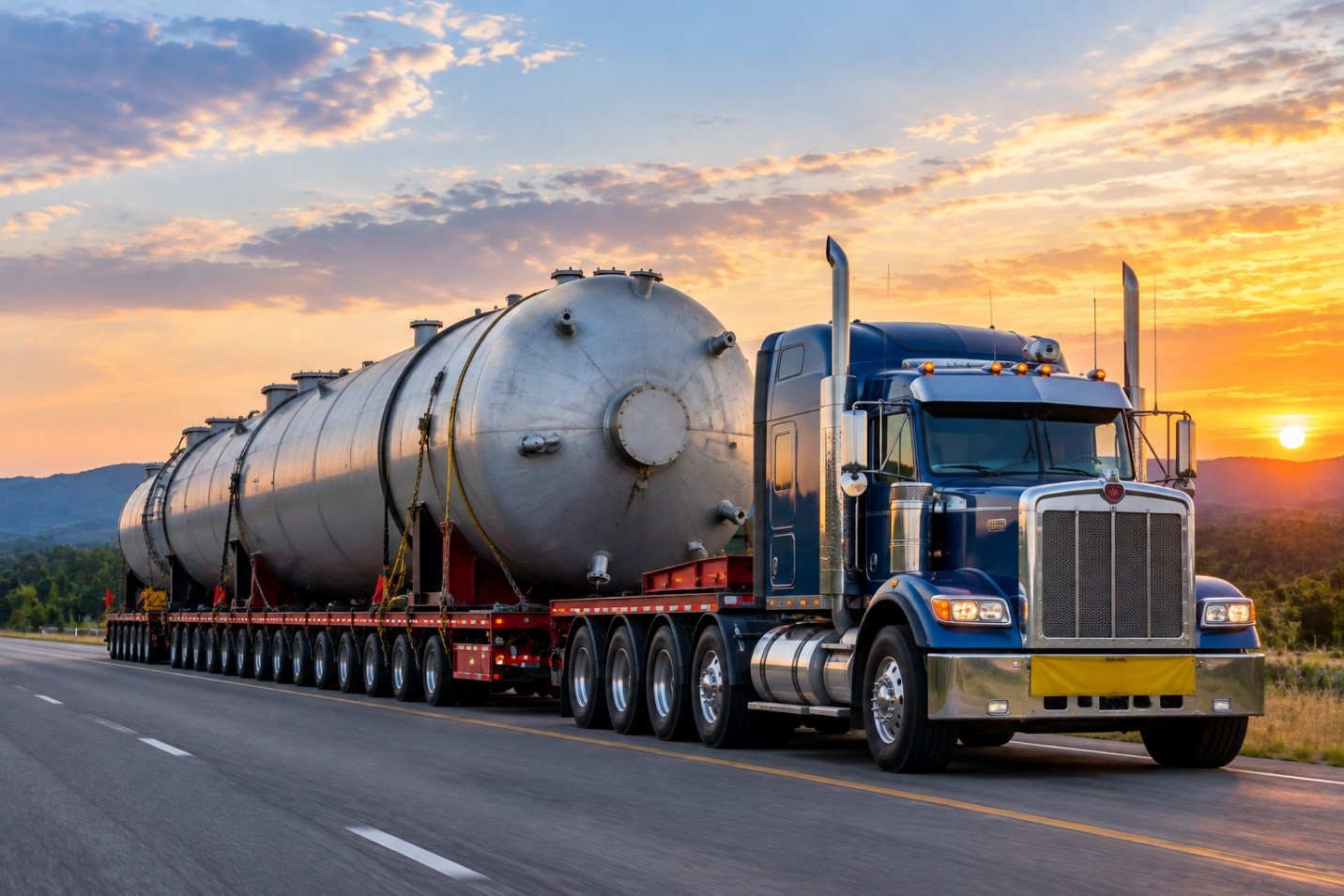
Heavy haul trucking is the specialized transport of extreme, oversized, or overweight cargo exceeding standard legal highway limits, typically anything over 80,000 pounds gross vehicle weight, 8 feet 6 inches in width, or 13 feet 6 inches in height. When massive industrial components, bridge beams, or heavy construction equipment need relocation, standard freight trailers and routine shipping methods are no longer viable.
We understand that coordinating specialized transport can feel overwhelming for project managers and logistics directors. That is why we provide end-to-end logistics planning, vetted carrier networks, and continuous tracking to ensure your oversized freight arrives safely at its destination without costly delays.
Defining Dimensions and Weight Limits for Heavy Haul Cargo
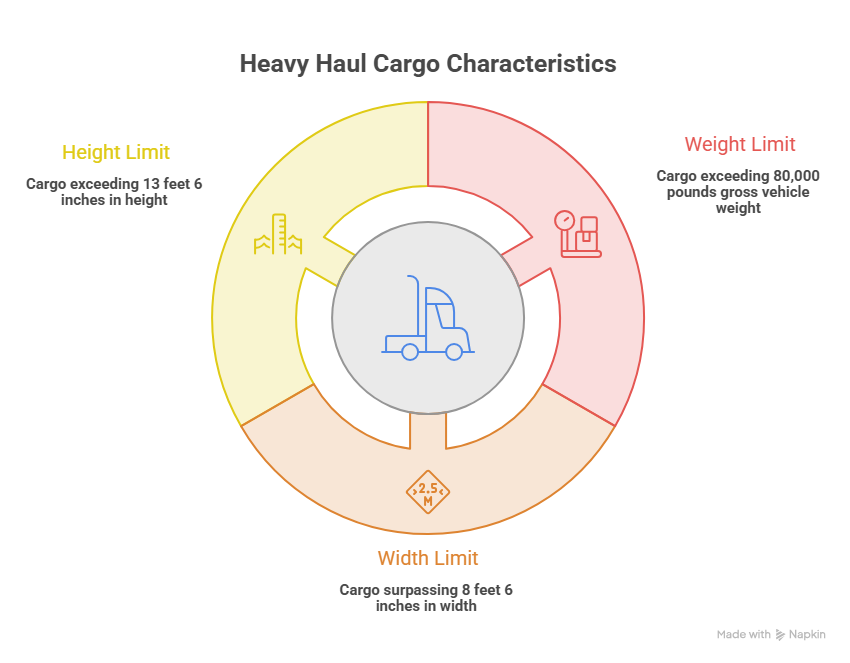
Heavy haul cargo is defined as any shipment exceeding eighty thousand pounds gross vehicle weight or surpassing standard legal dimensions of eight feet six inches in width and thirteen feet six inches in height.
Federal and state transportation agencies establish these standard boundaries to safeguard roadway infrastructure and maintain commuter safety. Any load exceeding standard weight thresholds or stretching beyond fifty-three feet in length falls into specialized transport classifications.
Explaining what heavy haul trucking is requires looking at gross vehicle weights, axle limits, and dimensional thresholds across different jurisdictions. When cargo exceeds standard flatbed capacity, standard shipping methods are no longer viable. Arranging dependable heavy equipment transport ensures that extreme loads travel with the necessary multi-axle distribution to satisfy strict highway weight limits.
Specialized Trailer Types Used in Heavy Hauling Operations
Specialized trailer configurations like removable goosenecks, lowboys, and multi-axle transporters are engineered to distribute massive weight and provide clearance under overhead highway obstacles. Standard trailers cannot support concentrated payloads or tall profiles without risking road hazards or bridge impacts.
Selecting the right trailer configuration is essential for safe transit and regulatory compliance.
- Removable gooseneck trailers detach at the front so heavy industrial machinery can drive directly onto the low deck platform.
- Lowboy and double drop trailers provide low ground clearance to keep tall industrial freight beneath highway overpasses.
- Extendable multi-axle trailers stretch to accommodate long structural beams while spreading axle weight over numerous wheels.
For shippers evaluating what heavy haul trucking is for their machinery, selecting the proper trailer is paramount. Booking professional specialized equipment services guarantees that your unique cargo dimensions are matched with modern, well-maintained trailers capable of handling severe structural loads safely.
Route Surveys, Permits, and Escorts for Multi-State Hauls
Navigating heavy haul transport requires securing individual oversized permits from every state on the route and conducting physical route surveys to confirm bridge capacities and overhead wire clearances. Oversized freight cannot simply follow standard GPS routing, as specific roads contain weight-restricted bridges, sharp turning radii, and low overpasses.
Route planning involves analyzing physical roadways and coordinating with local law enforcement or pilot cars. Shippers can review federal commercial vehicle size and weight requirements through the Federal Highway Administration to understand applicable dimensions and weight limits for freight movements on the Interstate System and National Network.
A core part of understanding what heavy haul trucking involves is managing these complex state travel regulations and escort protocols so cargo moves without roadside enforcement shutdowns.
Safety Protocols and Cargo Securement for Extreme Loads
Rigorous safety protocols for heavy hauling require balanced weight distribution across trailer axles and high-capacity tie-down chains secured to designated equipment points. Improperly balanced weight can cause trailer swaying, brake overheating, or mechanical failure during transit.
Securing massive industrial machinery demands strict adherence to commercial load regulations.
- Heavy-duty grade transport chains and binders must match or exceed working load limits for the cargo weight.
- Weight must be centered to place approximately sixty percent of the cargo weight over the front half of the trailer deck.
- Regular driver inspections during transit confirm that tie-downs remain tight and chains have not loosened from road vibration.
Coordinating heavy machinery transport through seasoned logistics coordinators ensures that drivers follow strict cargo securement guidelines. Protecting heavy equipment during transit prevents structural damage and ensures job site personnel can unload machinery safely upon arrival.
Calculating Costs and Pricing Factors for Heavy Haul Freight
Heavy haul freight costs are calculated based on total mileage, equipment axle requirements, individual state permit fees, and necessary escort vehicle services. Because extreme loads require specialized trailers, detailed route engineering, and custom travel permits, their per-mile rates are higher than standard dry van or flatbed freight.
Shippers asking what heavy haul trucking costs must factor in both base mileage rates and specialized accessorial expenses. A common estimating baseline involves multiplying mileage by the number of axles required, alongside permit charges, pilot car fees, and potential utility bucket truck support for lifting wires.
Working with a transparent freight partner guarantees that all permit costs, route survey fees, and escort requirements are itemized clearly without hidden surprise charges.
Frequently Asked Questions
What is considered heavy haul trucking?
Heavy haul trucking is the specialized commercial transport of cargo that exceeds the standard legal weight of eighty thousand pounds or surpasses legal dimensional limits on public roadways.
How do you get loads directly from shippers?
Motor carriers secure direct shipper loads by establishing commercial relationships, bidding on industrial contracts, and utilizing professional logistics load matching platforms.
Why are pilot cars required for oversized freight?
Pilot cars travel ahead of and behind oversized loads to alert civilian drivers, check overhead wire clearances, and guide trailers safely through tight turns.
How long does it take to secure heavy haul permits?
Securing state and local heavy haul permits typically takes anywhere from three business days to several weeks, depending on route complexity and superload engineering reviews.
Mastering Oversized Transportation for Long-Term Project Success
Mastering what heavy haul trucking is empowers your enterprise to execute demanding industrial and construction projects on schedule. By matching cargo dimensions with specialized multi-axle trailers, conducting thorough route surveys, and adhering to strict safety securement protocols, you protect valuable machinery while maintaining highway safety.
When your operations demand dependable heavy haul coordination, dedicated project dispatching, and vetted carrier capacity across North America, Freight City Logistics is ready to deliver tailored transport solutions built around your exact freight specifications.