
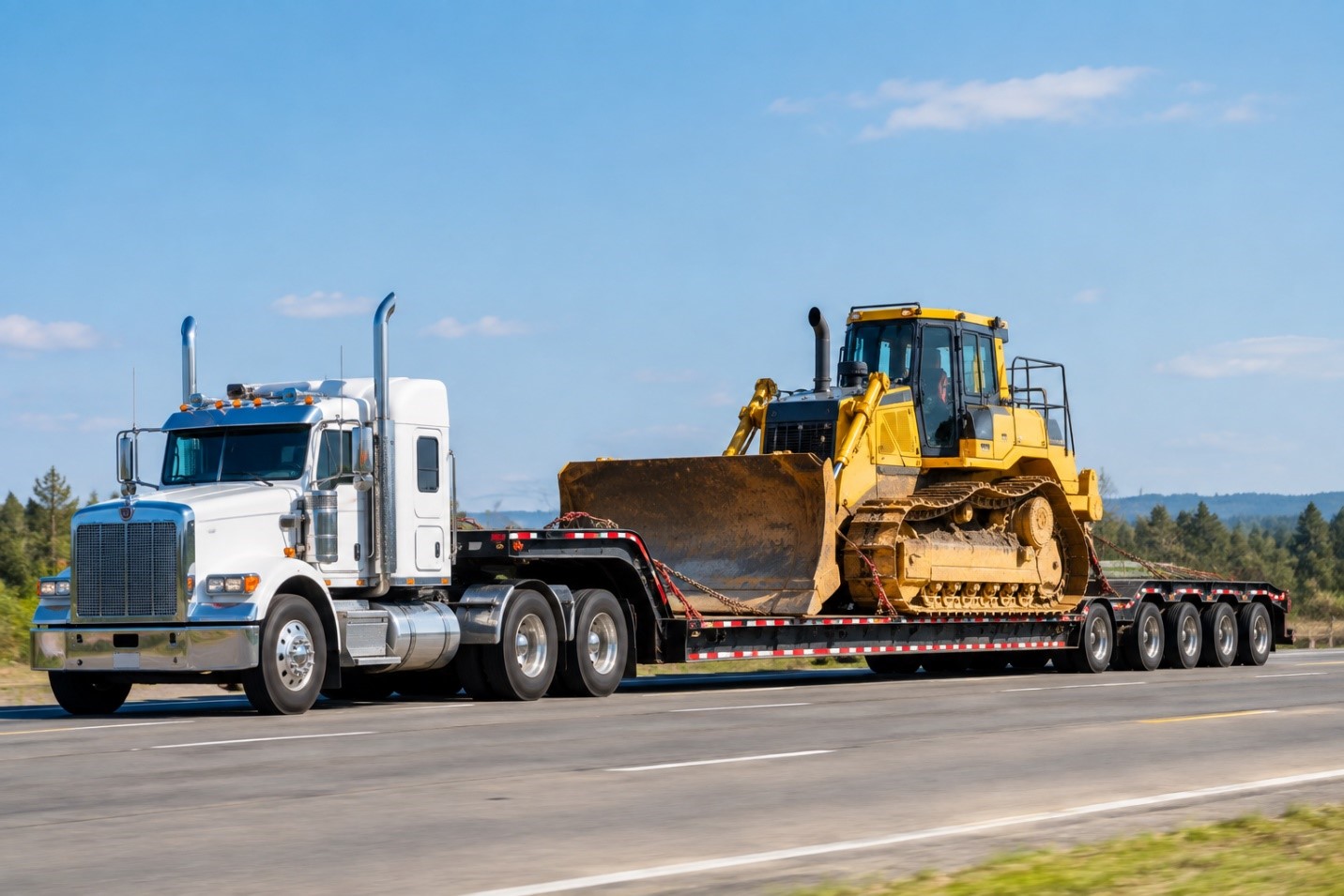
Learning how to transport a bulldozer safely is essential for equipment managers and site supervisors who must move heavy earthmoving machinery without project delays or expensive structural damage. Bulldozers are heavy, wide, and equipped with massive steel tracks that place extreme concentrated weight onto trailer decks.
We recognize that moving heavy construction machinery involves complex logistical challenges and substantial financial investments. That is why we provide dedicated freight coordination, matching your specific equipment with vetted heavy haul carriers who understand how to move extreme machinery securely from pickup to drop-off.
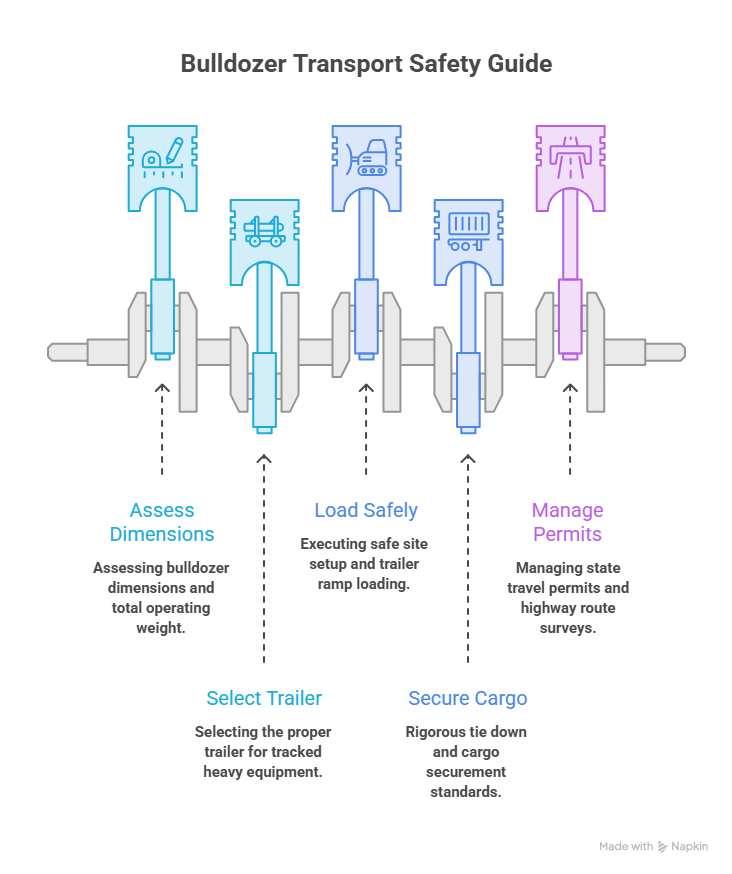
Assessing Bulldozer Dimensions and Total Operating Weight
Assessing bulldozer dimensions and total operating weight is the critical first step in determining trailer capacity and oversized travel permits. Before booking transport, you must record the exact height, width, length, and operating weight of the machine, taking into account any attached blades, rippers, or winches.
Forgetting to include blade width or counterweight additions can push a standard load into an oversized category or exceed legal axle weight limits.
A comprehensive understanding of how to transport a bulldozer begins with gathering accurate specifications directly from manufacturer documentation or certified scale tickets. We evaluate these exact dimensions to determine whether the blade requires angling or complete removal prior to departure.
Arranging professional heavy machinery transport ensures that your freight is matched with carriers who understand the structural balance and center of gravity of large industrial machinery.
Selecting the Proper Trailer for Tracked Heavy Equipment
Transporting a bulldozer requires a heavy-duty removable gooseneck trailer or lowboy platform that can support intense concentrated track weight. Standard flatbed decks are far too high and lack the load rating required for industrial earthmovers, making specialized low-clearance trailers necessary to keep cargo under overhead power lines and bridges.
Matching your machinery to the proper transport platform protects both the equipment and the highway infrastructure.
- Removable gooseneck trailers allow tracked dozers to crawl directly onto the flat deck without steep incline angles.
- Lowboy drop deck platforms lower total transport height to clear overhead highway overpasses safely.
- Multi-axle trailers distribute extreme tonnage across several road contact points to protect highway bridges.
When evaluating how to transport a bulldozer across long distances, selecting the right equipment platform is paramount. Booking specialized equipment services guarantees that your unique cargo dimensions are matched with modern, well-maintained trailers capable of handling severe structural loads safely.
Executing Safe Site Setup and Trailer Ramp Loading
Loading a bulldozer safely requires parking the transport trailer on firm, level ground and guiding the machine up clean ramps at a slow, steady pace. Sloped or muddy loading zones create dangerous rollover hazards that can damage equipment and endanger ground personnel. Before loading begins, operators must sweep all ramps and trailer beds clean of mud, grease, ice, and loose debris.
A crucial phase of how to transport a bulldozer involves setting up clear spotter positions and immobilizing the transport vehicle. Trailer wheels must be secured with heavy-duty wheel chocks before the machine approaches the ramps.
Federal Motor Carrier Safety Administration cargo-securement standards require heavy equipment to be properly prepared and secured against movement during transport. Attachments such as loader buckets and backhoes must also be locked or otherwise secured when their built-in mechanisms do not prevent movement.
Rigorous Tie Down and Cargo Securement Standards
Securing a bulldozer for transport requires attaching four independent heavy-duty transport chains directly to designated machine anchor points. Heavy tracked machinery can shift under sudden braking or sharp turns if tie-downs are loose or improperly positioned. Securing devices should never be hooked around hydraulic cylinders, hoses, or delicate steering linkages.
Proper cargo securement demands strict adherence to commercial load calculations.
- Grade seventy transport chains and ratchet binders must provide a combined working load limit equal to at least half the machine weight.
- Chains must pull in opposing directions at four separate corners to prevent forward, backward, and lateral movement.
- Solid steel or hardwood chocks should be wedged tightly against the front and rear of both steel tracks.
Coordinating your move through experienced heavy equipment transport coordinators ensures that drivers follow strict cargo securement guidelines. Verifying chain tension after the first few miles of travel prevents cargo shifting caused by roadway vibrations.
Managing State Travel Permits and Highway Route Surveys
Planning the transport route requires securing state oversized load permits and surveying travel corridors for low bridge clearances and narrow turns. Bulldozer blades frequently exceed standard eight foot six inch highway width limits, classifying the machine as an oversized load across most jurisdictions. Moving wide loads legally requires travel permits that specify approved transit times and travel corridors.
Finally, planning how to transport a bulldozer across state borders requires careful coordination of certified pilot cars and route clearance checks. Escort vehicles provide visual warnings to nearby traffic and verify that overhead utility lines clear the machine safely. Working with seasoned freight coordinators ensures that all municipal permits and travel curfews are satisfied well before the truck departs the staging yard.
Frequently Asked Questions
How heavy is a standard full-size bulldozer?
A full-size bulldozer typically weighs between thirty thousand and one hundred thousand pounds, depending on whether it is configured for medium earthmoving or heavy mining operations.
What is the best trailer for hauling a bulldozer?
A removable gooseneck trailer is the best platform for hauling a bulldozer because it detaches at the front to create a gentle approach ramp for heavy steel tracks.
How many chains do you need to secure a bulldozer?
Federal regulations require at least four heavy-duty transport chains attached to designated structural tie-down points to secure a bulldozer weighing over ten thousand pounds.
Do you need an oversized permit to move a bulldozer?
You need an oversized permit if the bulldozer blade width exceeds eight feet six inches or if the combined truck and machine weight exceeds eighty thousand pounds. Further, permit requirements also depend on the jurisdiction, route, and loaded configuration.
Master Your Construction Equipment Relocation with Precision
Understanding how to transport a bulldozer safely protects valuable construction assets and keeps major site development projects moving forward on schedule. By matching machine specifications with proper lowboy trailers, enforcing strict chain securement, and managing state permits proactively, you eliminate unnecessary transport risks.
When your construction projects require dependable machinery coordination, verified carrier safety, and expert logistics oversight across North America, Freight City Logistics is ready to deliver tailored heavy equipment transport solutions that keep your business moving ahead.