
We arrange heavy equipment transport in Illinois for farm operators, contractors, manufacturers, and rental fleets, with IDOT permits, escorts, and trailer matching handled across Chicagoland, central Illinois, and southern Illinois. Freight City Logistics is a licensed, bonded freight transportation company (DOT 3752961, MC 1332997) that coordinates freight through a vetted partner-carrier network. You work with one contact while we assign an insured carrier and plan the route.
What We Haul Across Illinois
Heavy equipment transport in Illinois follows the planting calendar, the construction season, and plant schedules.
- Farm machinery: planters, combines, and tractors moving between dealers, custom operators, and fields
- Construction and road-building equipment: excavators, pavers, and motor graders
- Manufacturing and plant equipment: units moving in and out of industrial sites
- Rental fleets: inventory repositioned between branches and job sites
IDOT Oversize and Overweight Permit Basics
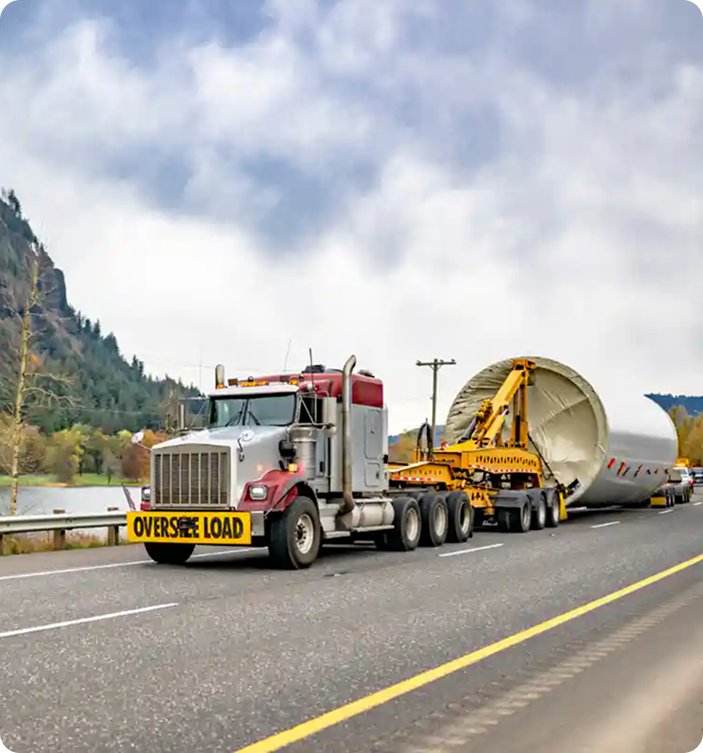
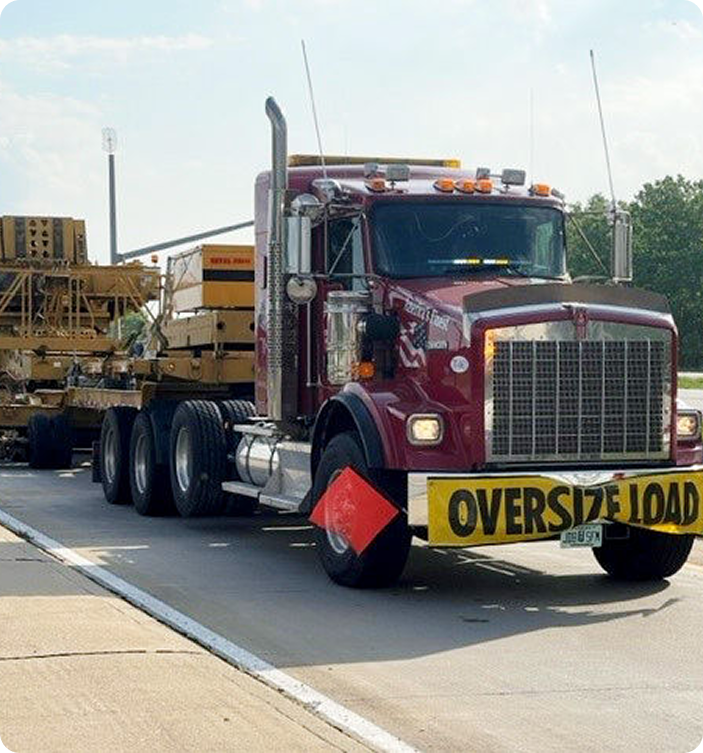
IDOT’s permit unit issues oversize and overweight permits for Illinois state highways, and we coordinate permits for every state a route crosses, so oversize load transport in Illinois runs on one plan. The legal baseline is 8 ft 6 in wide, 13 ft 6 in high, and 80,000 lbs gross vehicle weight. Permits come as single-trip permits for one move and limited continuous operation permits for qualifying repeat moves. Rules were last verified in October 2026 against 92 Illinois Administrative Code Part 554.
Escorts and Illinois State Police
The permit states whether a move needs one civilian escort or two. On a two-lane highway, the escort rides about 300 feet ahead of the load, and an overheight move adds a lead escort with a height pole. Illinois State Police escorts apply to the largest moves and to overweight moves where bridge limits require traffic to clear a structure. The permittee arranges them through State Police headquarters at least 24 hours ahead, and local police may take that role on a move inside one city or county.
Travel days, daylight and holidays
IDOT limits when permitted loads move, and each permit lists the limits for its route.
- Oversize moves generally travel in daylight, and Sunday movement is not allowed.
- Holiday limits begin at noon on the day before a holiday or holiday weekend.
- Movement stops on snow or ice and when visibility is unduly poor.
- Loads over 14 ft 6 in wide, or those with a State Police escort, generally move only when the Permit Office is open.
- Cook County and the City of Chicago add restrictions of their own.
Planning for Heavy Equipment Transport in Illinois by Zone
Illinois is large and uneven, so a heavy haul in Illinois plans differently depending on where it starts.
Chicagoland
Equipment hauling in Chicagoland faces the densest traffic, the tightest clearances, and the most layers of rules in the state. Cook County and the City of Chicago add restrictions to state permit rules, and city-jurisdiction roads carry their own permits and hours. Routes lean on I-55, I-80, I-90, and I-94, and wide loads need precise timing at the interchanges. Rental fleet and contractor inventory moves most here, so staging at the pickup yard and a clear unloading plan save the most time. See our Chicago page for city-specific rules.
Rockford, the Quad Cities and northern Illinois
North of Chicagoland the roads open up. I-90 runs through Rockford toward Wisconsin, I-39 heads south from there, and I-80 and I-74 reach the Quad Cities and the Iowa line. Heavy equipment transport here mixes manufacturing equipment, construction machines, and farm machinery bound for dealers and fields. Mississippi River crossings into Iowa deserve early review because each bridge has posted limits, and a load for Iowa picks up that state’s permit as well.
Peoria and central Illinois
Central Illinois is where planters, tractors, and combines meet plant equipment. I-74 serves Peoria, I-55 and I-74 cross at Bloomington-Normal, and I-72 links Decatur and Springfield. Heavy equipment transport in central Illinois peaks around planting and harvest, so we suggest booking ahead of both seasons. A combine or planter often ships with its header or toolbar removed or folded to cut width, which can change the permit it needs.
Metro East and southern Illinois
Metro East, across the river from St. Louis, and the southern counties connect river terminals, rail yards, and industrial sites. I-55, I-64, and I-70 funnel traffic toward the Missouri crossings, so a move into St. Louis involves Missouri’s permit as well as Illinois’s. Farther south, I-57 and I-24 cross rural counties with fewer services, so we confirm site access and unloading help before dispatch.
Illinois Interstates and Long-Haul Lanes
Eight interstates carry most equipment hauling in Illinois.
| Corridor | Where it links | Planning note |
|---|---|---|
| I-80 | Indiana to the Quad Cities | Main east-west run across northern Illinois |
| I-90 and I-94 | Chicago to Wisconsin and Indiana | Heavy urban traffic near Chicago |
| I-55 | Chicago to St. Louis | Long run through central Illinois |
| I-57 | Chicago to southern Illinois | Rural stretches with fewer services |
| I-70 | Indiana to Missouri | Crosses the state’s east-central counties |
| I-72 and I-74 | Central Illinois to Iowa and Indiana | Farm and plant equipment lanes |
Transit time varies with permits, escorts, and travel windows, and we confirm the window for your lane when we quote.
Equipment and Freight Services for Illinois Businesses
Illinois businesses may need to move construction machinery, plant equipment, or oversized components between facilities and project sites.
Construction Equipment Transport for machinery used on construction and infrastructure projects.
Industrial Equipment Transportation for production lines, presses, and processing equipment.
Construction Material Transportation for steel, precast concrete, and other project materials.
Trailer Choices for Farm and Construction Equipment
Removing an attachment can change both the trailer and the permit, and excavator transport follows the same logic when a bucket or boom must come off. We confirm the plan with the carrier before booking.
| Equipment | Trailer | Tip |
|---|---|---|
| Combine | Lowboy | Header removed or folded to cut load width |
| Planter | Step deck | Toolbar folded to reduce transport width |
| Tractor with duals | Step deck | Dual wheels removed to bring width down |
| Asphalt paver | Lowboy | Screed extensions removed before loading |
| Motor grader | Lowboy | Blade angled and secured to hold height |
Why Illinois Businesses Choose Freight City Logistics
For heavy equipment transport in Illinois, we check each carrier’s active authority, safety record, and insurance before assignment. We coordinate permits for every state a route crosses, which matters on lanes into Iowa, Missouri, Indiana, and Wisconsin. We pair the trailer to your machine and to the site, and one contact answers your questions from quote to delivery. You can read more about our company.
- Routing that accounts for urban restrictions: Moving machinery through Chicago can involve expressways, tollways, city streets, and designated truck routes. We consider the load’s dimensions and destination when coordinating a suitable route.
- Permit coordination at the state and city levels: Depending on the shipment, IDOT requirements and City of Chicago street permits may both be relevant. We account for the jurisdictions involved and identify the applicable requirements.
- Planning for industrial and equipment-yard pickups: Machinery collected from industrial properties, contractor yards, or other commercial facilities may have appointment and loading requirements. We factor those details into the transport arrangement.
- Equipment moves across Chicagoland and beyond: Whether the destination is a nearby suburb or another state, we coordinate the trailer and carrier around the shipment’s specifications, route, and delivery requirements.

Get a Free Illinois Heavy Equipment Quote
Request heavy equipment transport in Illinois by sending the machine, the pickup point, and the destination, and we plan the trailer, the permits, and any escorts before your quote goes out. Call 888-520-1718 or send your details online, including the machine’s width and height and whether an attachment can come off.
Illinois Heavy Equipment Transport FAQs
Do I need an IDOT permit to haul equipment in Illinois?
Yes, you need an IDOT permit when equipment exceeds 8 ft 6 in wide, 13 ft 6 in high, or 80,000 lbs gross vehicle weight on state highways. We arrange the permit with the carrier before pickup. Equipment within those limits on a legal trailer travels without one.
Does an oversize load in Illinois need a State Police escort?
Only the largest moves do, along with overweight moves where bridge limits require traffic to clear a structure. Most oversize loads use civilian escorts, and the permit says how many. When State Police are required, the permittee arranges them at least 24 hours ahead.
Can oversize equipment travel on Sundays or holidays in Illinois?
No, Sunday movement is not allowed, and holiday limits begin at noon on the day before a holiday or holiday weekend. Cook County and the City of Chicago add restrictions, so we build the schedule around your permit’s limits.
Can removing a header or attachment keep equipment under permit limits?
Often yes, because removing a header, bucket, or screed extension can cut width or height and change the permit a load needs. Permits are generally written for loads that cannot be reduced, so the carrier confirms what can come off before booking.
What affects the cost of hauling a combine or planter across Illinois?
Cost depends on distance, trailer type, load width, permits, escorts, and timing. A combine with its header on needs more escort and permit work than one with it removed, and planting and harvest seasons raise demand. We quote each lane after reviewing your equipment, with no fixed rate before then.
How far ahead should I book farm equipment transport in Illinois?
Book as early as you can before planting and harvest, when machines move most. Wide or heavy loads need time for route review and permit issue, and a haul into Iowa, Missouri, Indiana, or Wisconsin adds that state’s permit.