
Finding the best mobile home movers is essential for ensuring that your manufactured structure travels securely and arrives at its new foundation without structural damage. Relocating a manufactured home is a complex heavy haul operation that involves structural stability checks, specialized hydraulic towing gear, and strict multi-state highway travel regulations.
Unlike standard freight shipping, moving a residential structure requires seasoned coordinators. We understand that moving a manufactured home represents a significant financial and personal milestone. That is why we provide dedicated logistics coordination, connecting you with verified, fully insured carriers who prioritize structural integrity and safety across every mile.
What Sets Apart the Best Mobile Home Movers in the Industry
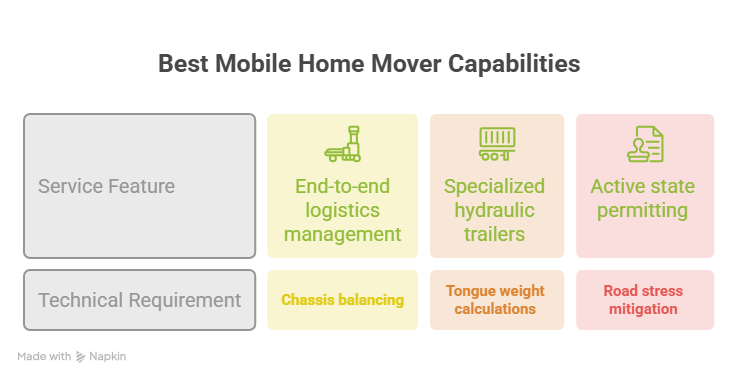
The best mobile home movers set themselves apart by providing end-to-end logistics management, specialized hydraulic trailers, and active state permitting rather than relying on standard towing practices.
Moving single-wide, double-wide, or modular structures demands deep technical knowledge of chassis balancing, tongue weight calculations, and road stress mitigation. Top-tier providers evaluate the age, structural frame condition, and tire ratings of your structure before it ever touches a highway.
When planning a relocation, selecting the best mobile home movers means looking for partners who manage the entire relocation journey seamlessly. We coordinate with vetted carriers who understand the exact mechanics of manufactured housing transit.
Selecting dependable mobile home moving services ensures that your structure is handled by professionals equipped with hydraulic leveling gear, heavy-duty toters, and certified hitches that keep your home level throughout transit.
Key Equipment Required for Safe Manufactured Home Relocation
Safe mobile home relocation requires heavy-duty toter trucks, hydraulic jacking systems, and specialized low-clearance trailers designed to protect structural frames from twisting. Standard freight trucks lack the specialized ball hitches, low center of gravity platforms, and hydraulic suspension systems needed to pull wide residential loads safely over long distances.
Transporting wide structures securely demands specialized equipment tailored to the unique dimensions of your home.
- Heavy-duty toter trucks equipped with reinforced hitches and low gear transmissions provide maximum control on steep highway grades.
- Multi-axle transport setups distribute heavy structural weight evenly across road surfaces to prevent axle overheating.
- Hydraulic leveling jacks allow precise lifting and positioning during loading and site placement.
Working with the best mobile home movers guarantees that your home is matched with well-maintained machinery capable of handling heavy structural payloads. In complex relocations requiring unique loading platforms or cranes, scheduling dependable specialized equipment transport ensures every phase of the move proceeds smoothly without structural strain.
Coordinating Heavy Haul Routes and Escort Vehicles
Professional mobile home transport requires pulling oversized load permits for every state along the route and scheduling certified escort vehicles to guide wide structures safely. Oversized loads cannot travel on standard commuter corridors or operate during restricted holiday travel windows. Each state, county, and municipality enforces unique guidelines regarding maximum travel dimensions, bridge weight ratings, and daylight operation limits.
Route planning involves conducting comprehensive physical surveys to spot low-hanging utility lines, narrow highway lanes, tight turning radii, and low bridge clearances. According to HUD’s Manufactured Home Construction and Safety Standards, manufactured homes and their transportation systems must be designed to withstand highway movement, while homes are also assigned wind-load requirements based on their designated wind zones.
Partnering with the best mobile home movers eliminates transit delays by securing all necessary oversized permits well in advance and dispatching certified pilot cars to escort your structure through challenging intersections.
Preparing Your Structure and Verifying Essential Cargo Insurance
Preparing a manufactured structure requires disconnecting all utility lines, securing interior fixtures, removing exterior skirting, and verifying full-value cargo insurance coverage. Proper preparation protects structural integrity and prevents high-speed winds from damaging siding, roofing shingles, and windows while in transit.
Taking proactive structural precautions ensures a smooth pickup and delivery process.
- Remove or securely pack all loose interior furniture, wall hangings, and personal belongings to prevent load shifting.
- Disconnect plumbing, electrical lines, and climate control units prior to driver arrival.
- Fasten all exterior siding panels, cover windows with protective wood sheathing, and inspect the underlying chassis.
Before booking transport, confirming that the carrier maintains adequate cargo insurance is critical. We review carrier certificates to verify that liability limits reflect the full replacement cost of your home. Coordinating your relocation alongside expert heavy equipment transport coordinators ensures that both your home and any accompanying foundation equipment travel under full insurance protection.
Evaluating Cost Factors and Transparent Moving Estimates
Mobile home moving costs vary based on overall structure dimensions, transport mileage, state permit fees, and site preparation requirements. Single-wide homes moving locally require fewer permits and smaller escort teams, whereas double-wide structures moving across state lines demand dual escort cars, extensive permitting, and multi-truck coordination.
The best mobile home movers provide transparent, itemized estimates that account for every logistical requirement upfront. Hidden costs such as tire blowouts, utility line lifting fees, and site leveling charges should be discussed openly before contracts are signed.
We believe in clear communication so you know exactly what your transport budget includes. Evaluating quotes based on carrier safety ratings and verified track records guarantees that your investment remains secure from pickup to final foundation placement.
Frequently Asked Questions
What are the common problems with mobile home movers?
Common problems include unexpected transit delays caused by permit issues, hidden fees for route escorts, and structural damage resulting from poorly maintained towing equipment.
What are the best tips for choosing mobile home movers?
Choose a licensed transporter with verified operating authority, active cargo insurance matching your home value, and proven experience hauling oversized residential structures.
How much does it cost to move a double wide mobile home?
Moving a double-wide home typically costs more than a single-wide unit because it requires separate transport for each section, dual state permits, and additional escort vehicles.
How long does it take to prepare and transport a mobile home?
Preparation generally takes several days to disconnect utilities and secure structural components, while transit time depends on route clearance surveys and state travel curfews.
Making Your Manufactured Home Move Easier
Choosing the best mobile home movers transforms a complex and stressful relocation into a smooth, predictable experience. By prioritizing verified carrier credentials, advanced hydraulic equipment, comprehensive route planning, and full value cargo insurance, you ensure that your residential structure arrives at its new destination safely and ready for setup.
When your relocation requires professional coordination, dependable carriers, and personalized support across North America, Freight City Logistics is ready to deliver tailored transport solutions that protect your valuable home every mile of the way.