
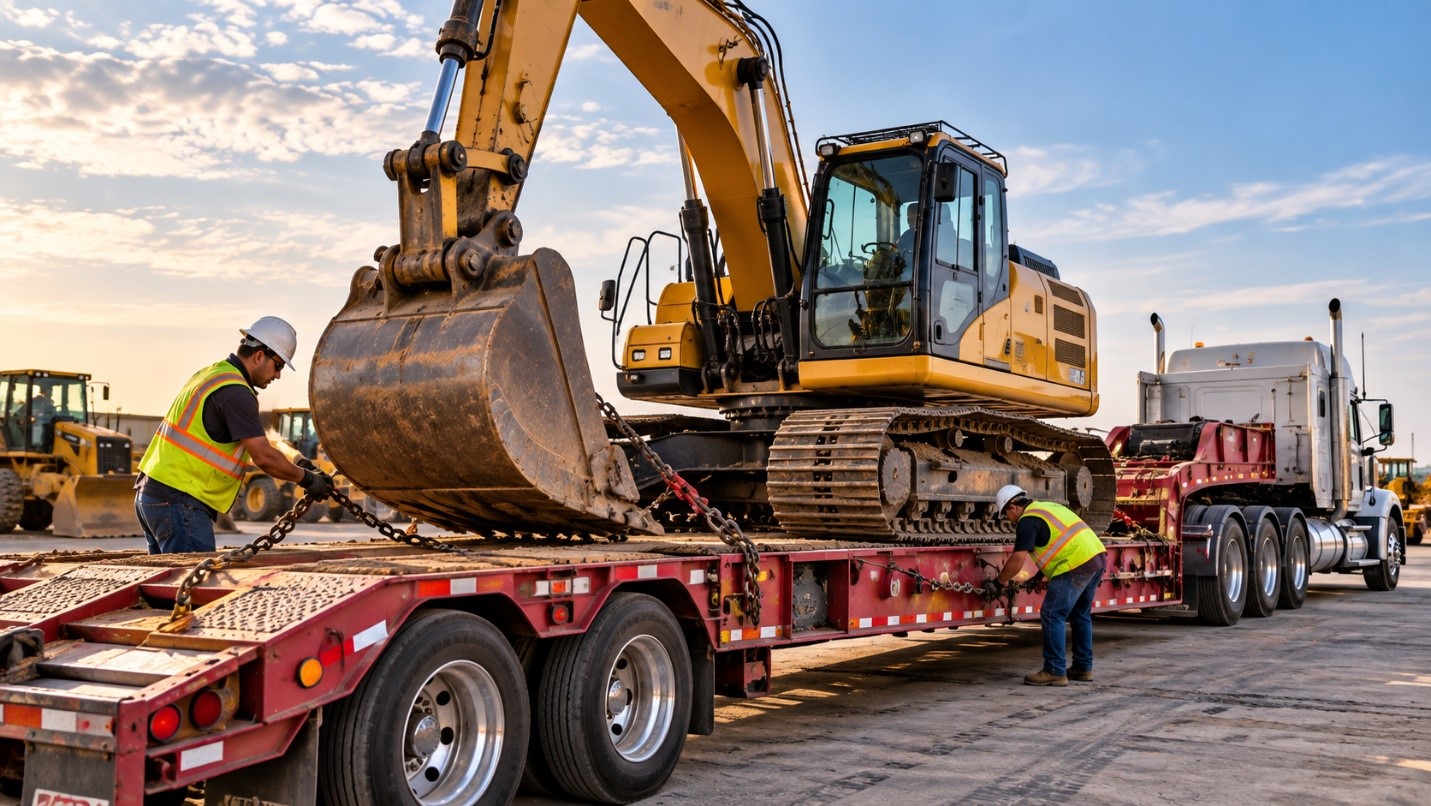
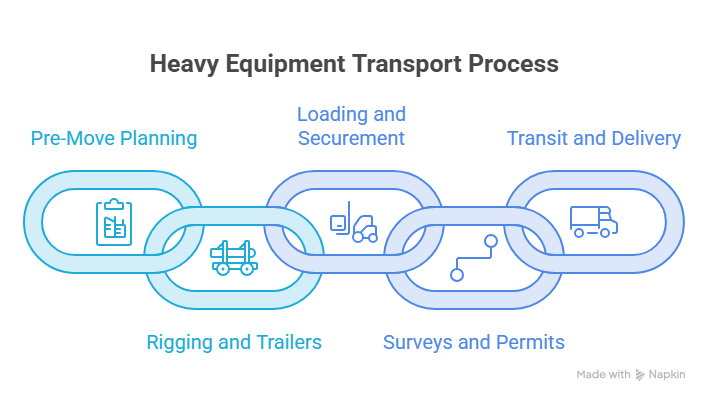
Learning how to move heavy equipment safely and efficiently requires a strict 5-step process: accurately assessing machinery dimensions and weight, selecting the correct lowboy or RGN trailer, securing the load with four-point rated transport chains, conducting route surveys to secure oversized transit permits, and executing safe transport with regular tie-down inspections. Following these essential steps prevents equipment tipping, axle overloading, overhead bridge impacts, and costly job site delays.
We understand that coordinating industrial machinery transport can feel daunting for site supervisors and operations directors. That is why we provide end-to-end logistics support, connecting you with vetted carrier networks and proven rigging specialists who keep your assets secure every step of the way.
Pre-Move Planning and Machinery Dimension Assessment
Assessing total machinery dimensions and operating weight is the critical first step in determining trailer types and transport permits. Before scheduling any move, you must measure the exact height, width, length, and weight of your machine, including any attached buckets, counterweights, or boom extensions. Overlooking an auxiliary attachment can push a standard load into an oversized category or exceed legal axle weight limits.
Mastering how to move heavy equipment begins with gathering accurate specifications directly from manufacturer manuals or physical scales. We evaluate these exact dimensions to determine whether components need dismantling prior to loading.
Arranging professional heavy equipment transport ensures that your freight is matched with carriers who understand the structural balance and center of gravity of large industrial machinery.
Selecting the Right Rigging Tools and Transport Trailers
Choosing the right trailer and certified rigging gear ensures stability and prevents mechanical failure during loading and transit. Standard flatbed decks are unsuitable for tall or extremely heavy machinery, making specialized trailers necessary to keep cargo heights within legal limits.
Matching your machinery to the proper transport platform protects both the equipment and the highway infrastructure.
- Removable gooseneck trailers allow tracked or wheeled equipment to drive directly onto the trailer deck smoothly.
- Lowboy and double drop platforms lower the center of gravity to accommodate tall machinery under overhead obstacles.
- Heavy-duty spreader bars, shackles, and rated chains handle dynamic forces during crane loading operations.
Choosing the correct equipment configuration is a vital step when planning how to move heavy equipment without mechanical issues. In complex situations where unusual machine geometries require custom deck configurations, booking specialized equipment transport guarantees safe transit and proper clearance across every highway mile.
Safe Loading Practices and Cargo Securement Protocols
Proper cargo securement requires positioning the machinery’s center of gravity over the trailer axles and attaching direct tie-down chains to rated anchor points. Prior to loading, operators must sweep all ramps and trailer beds clean of mud, oil, ice, and loose debris to prevent traction loss. Spotters should always guide the driver up the ramps at a controlled pace.
Securing the machine involves placing roughly sixty percent of the cargo weight over the front half of the trailer deck to ensure highway stability. Following OSHA rigging requirements, including inspecting slings before use, staying within rated load capacities, and keeping workers clear of suspended loads, helps reduce hazards during industrial material handling.
Applying at least four direct chains with a combined working load limit equal to fifty percent of the machine weight is fundamental to moving heavy equipment in full compliance with commercial safety standards.
Conducting Route Surveys and Securing Required Permits
Conducting physical route surveys identifies low bridge clearances, weight-restricted roads, and overhead utility lines before transport begins. Moving heavy machinery across municipal, county, and state borders requires specific permits that dictate approved travel corridors and operating hours.
A comprehensive route plan eliminates roadside surprises and costly detour delays.
- Surveying bridges and overpasses confirms that structural weight ratings can support combined vehicle loads.
- Checking utility line heights ensures tall equipment passes safely without contacting overhead power grids.
- Scheduling certified pilot cars provides early visual warnings for oncoming traffic through narrow turns.
Coordinating heavy machinery transport through a knowledgeable logistics partner streamlines the entire permitting process. Having extensive knowledge of how to move heavy equipment across state lines ensures that all travel curfews and escort car requirements are satisfied before departure.
Navigating Roadway Transit and Site Delivery
Safe transit execution relies on reduced driving speeds, expanded following distances, and regular chain tension inspections throughout the journey. Transporting heavy machinery increases stopping distances significantly and demands broader turning radii at intersections.
Drivers must pause periodically during long-distance trips to inspect tie-down chains, binders, and tire pressures. Once the carrier arrives at the delivery site, the team must confirm that the ground surface is level and capable of supporting the machinery weight during unloading.
Clear communication between operators, spotters, and site managers ensures that understanding how to move heavy equipment extends all the way through the final staging phase.
Frequently Asked Questions
What are the main hazards when moving industrial machinery?
The main hazards include equipment tipping during ramp loading, structural impact with overhead bridges, and cargo shifting caused by improper tie-down securement.
How many chains are required to tie down heavy machinery?
Federal regulations require a minimum of four direct tie-down chains for commercial equipment exceeding ten thousand pounds, with each corner secured independently.
What are the tips for moving heavy furniture safely?
Moving heavy furniture safely requires using specialized rolling tools like furniture sliders or dollies to glide items smoothly across floors rather than lifting them manually.
How do you determine if oversized transit permits are necessary?
Oversized permits are necessary whenever total vehicle dimensions exceed standard highway limits, typically eight feet six inches in width or thirteen feet six inches in height.
Mastering Heavy Haul Logistics with Total Confidence
Mastering how to move heavy equipment safely and efficiently protects your valuable capital investments while keeping construction schedules on track. By prioritizing detailed dimension assessments, rated rigging equipment, thorough route surveys, and strict cargo securement, you eliminate unnecessary job site hazards and ensure smooth execution.
When your organization requires dependable machinery coordination and experienced account support across North America, Freight City Logistics is ready to deliver tailored heavy haul solutions built around your operational needs.