
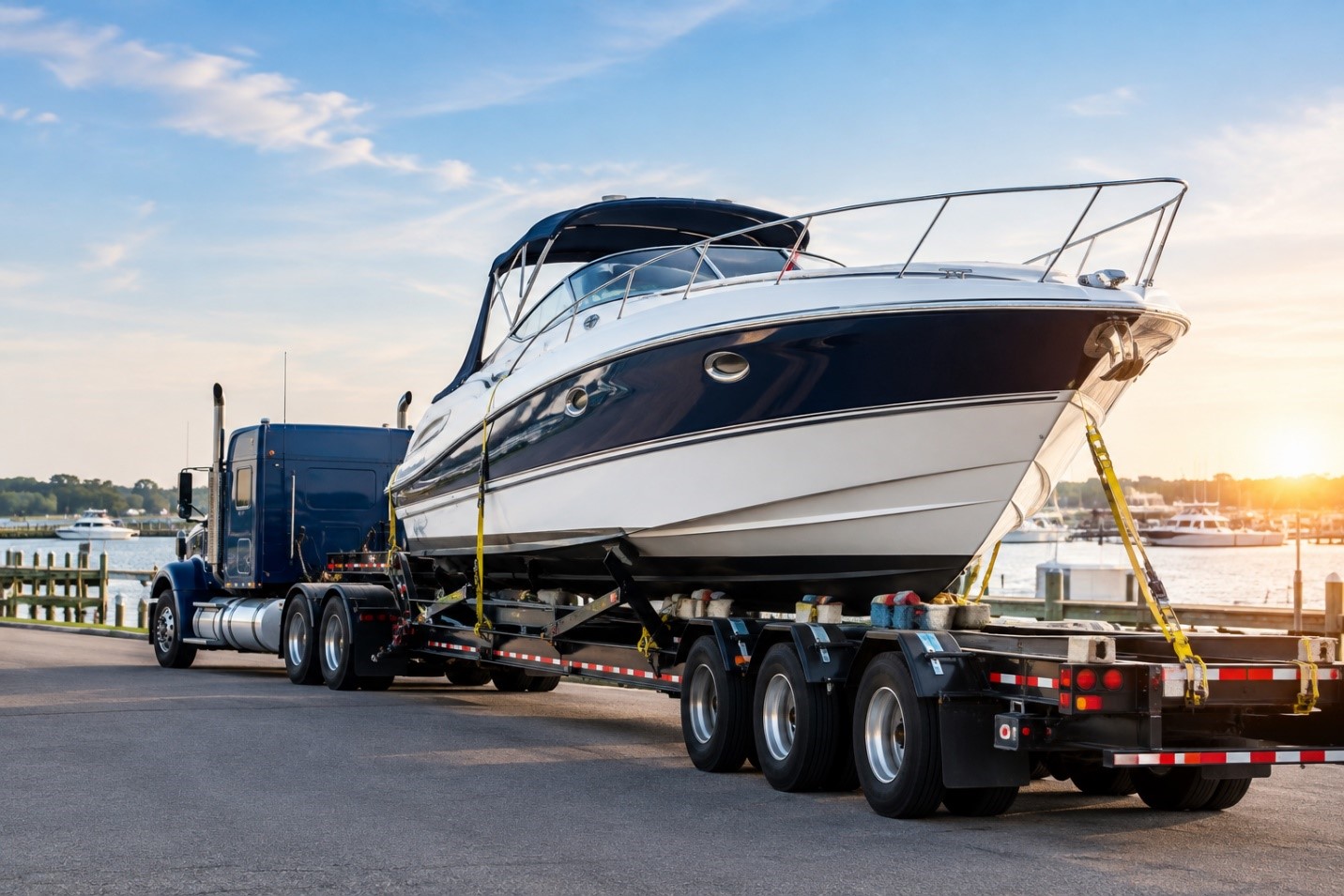
Finding the best boat transport companies means comparing specialized equipment, marine hauling experience, insurance coverage, permitting capabilities, and communication standards. Transporting high-value powerboats, yachts, and sailboats over land requires specialized logistics that standard freight trucks cannot provide.
We understand that entrusting your personal watercraft or commercial vessel to an overland carrier can cause understandable concern. That is why we provide dedicated freight coordination, matching your unique boat dimensions with vetted marine haulers who possess the proper equipment and experience to safeguard your investment across every mile.
What Defines the Best Boat Transport Companies in the Industry
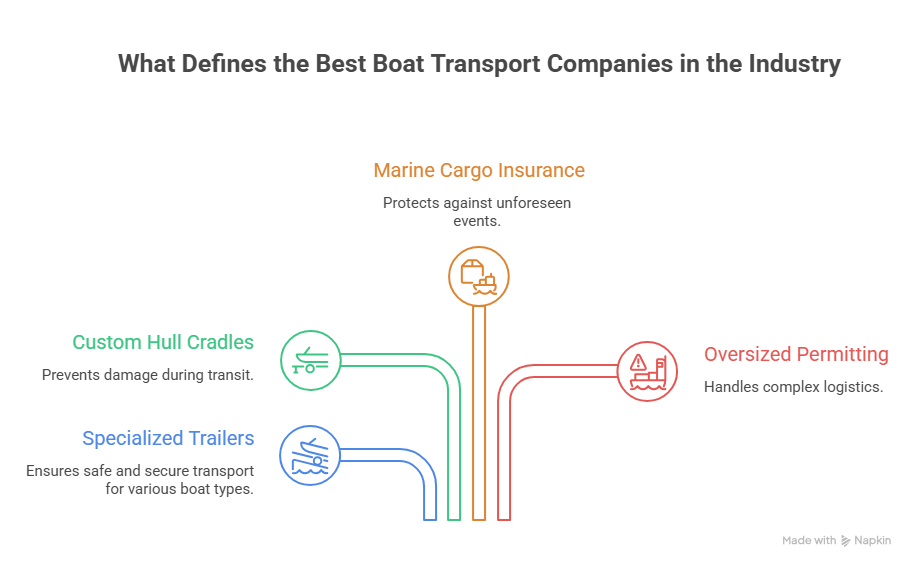
The best boat transport companies distinguish themselves through specialized hydraulic trailers, custom hull cradles, active marine cargo insurance, and complete oversized permitting capabilities. Many general freight carriers lack the specific knowledge needed to support deep-keel sailboats or wide-beam cruisers without causing structural stress.
Top-tier marine logistics providers understand how road vibrations, wind resistance, and strap placement affect gelcoats and hull stringers during long-distance transit.
We coordinate with vetted carriers who maintain specialized air ride suspensions that absorb highway bumps and protect delicate onboard electronics. Arranging reliable boat hauling services gives you peace of mind knowing that experienced drivers oversee loading, transit, and ramp unloading.
The best boat transport companies also assign dedicated account managers who provide direct communication and status updates throughout the transit journey.
Selecting the Right Trailer Equipment for Different Vessel Types
Choosing the right transport trailer depends directly on the hull shape, keel draft, and beam width of your specific watercraft. Using an improper trailer setup can lead to hull deformation, ground clearance issues, or transport failure on steep highway inclines.
Specialized marine trailers provide custom support tailored to distinct hull designs.
- Hydraulic air ride trailers adjust ground clearance dynamically to navigate marina ramps and uneven boatyard surfaces.
- Lowboy step deck trailers lower the transport height of tall cabin cruisers to clear low highway overpasses safely.
- Custom sailboat cradles distribute deep keel weight evenly across structural pads to prevent point loading on the hull.
When moving accompanying marina vehicles, trailers, or utility craft, booking dedicated vehicle transport services keeps your entire marine operation coordinated. The best boat transport companies inspect every trailer bunk, roller, and tie-down strap before departure to ensure optimal support.
Planning Compliant Routes for Oversized Loads
Safe overland vessel transit requires pulling oversized permits for hulls exceeding eight feet six inches in width and planning routes that avoid low bridges or tight turns. Transporting wide-beam boats across state lines introduces complex regulatory hurdles, as every jurisdiction enforces unique travel curfews and escort car thresholds.
Route surveys identify potential hazards like low-hanging utility lines, narrow toll booths, and sharp mountain curves before the truck leaves the marina. Further, the U.S. Coast Guard establishes regulations and policies governing merchant mariner qualifications, licensing, certification, and manning requirements for commercial maritime operations.
Working with the best boat transport companies eliminates travel delays by securing all municipal and state permits well in advance and dispatching certified pilot cars to guide wide vessels safely through urban traffic.
Preparing Your Vessel and Securing Proper Marine Cargo Coverage
Preparing a boat for overland highway transport requires securing interior items, draining fluid tanks, removing exterior canvas or electronics, and verifying full-value marine cargo insurance. Proper preparation prevents wind damage, road grime accumulation, and dangerous weight shifting inside the cabin during high-speed highway travel.
Taking proactive steps prior to driver arrival ensures a smooth pickup process.
- Drain fuel and water tanks down to one-quarter capacity or less to reduce overall weight and prevent sloshing.
- Remove or latch all exterior cushions, antennas, radar arches, and canvas covers to eliminate wind drag.
- Lock all cabin doors, secure interior galley items, and disconnect battery banks to prevent electrical issues.
Before scheduling transit, verifying that your hauler maintains adequate marine cargo insurance is essential. Standard freight policies often exclude watercraft damage or cap claims below actual market replacement value. Selecting specialized equipment transport ensures your high-value marine assets travel under verified insurance coverage tailored to vessel replacement costs.
Comparing Hauling Quotes and Service Reliability Across Long Hauls
Evaluating boat shipping estimates requires looking beyond base mileage rates to examine permit fees, marina loading accessorials, and driver communication standards. An unusually cheap estimate often omits essential expenses such as marina wait times, oversized permits, or escort car fees, resulting in unexpected surcharges on your final invoice.
The best boat transport companies provide transparent pricing that clearly outlines every operational cost. We prioritize clear communication and carrier vetting so you know exactly what your transport plan includes. Evaluating quotes based on carrier safety ratings, insurance verification, and proven marine hauling experience ensures that your vessel arrives safely at its home port without financial surprises.
Frequently Asked Questions
What makes a boat an oversized load on the highway?
A boat is considered an oversized load on public highways when its total beam width exceeds eight feet six inches or its loaded height exceeds thirteen feet six inches.
How much does overland boat shipping typically cost?
Overland boat shipping costs vary from a few hundred dollars for local runs to several thousand dollars for cross-country journeys, depending on vessel dimensions and permitting requirements.
Do I need to shrink wrap my boat before highway transport?
Shrink wrapping is generally a protective option rather than a universal highway transport requirement. It can help protect the boat from road grime and debris, but it should be applied professionally to prevent loose plastic from tearing or damaging the gelcoat at highway speeds.
What is the difference between wet slip loading and dry yard transport?
Wet slip loading involves driving a hydraulic trailer directly into a ramp to float the vessel on, while dry yard transport utilizes marina travel lifts or cranes to place the hull onto trailer bunks.
Securing Smooth Waters for Your Overland Vessel Relocation
Choosing the best boat transport companies ensures that your watercraft receives the technical care, specialized equipment, and legal oversight necessary for a seamless overland journey. By focusing on verified marine carriers, proper hull preparation, and transparent pricing, you protect your vessel against road stress and costly travel delays.
When your vessel requires dependable logistics coordination, dedicated support, and proven carrier capacity across North America, Freight City Logistics is ready to deliver tailored boat transport solutions that keep your shipping journey smooth from marina to marina.