
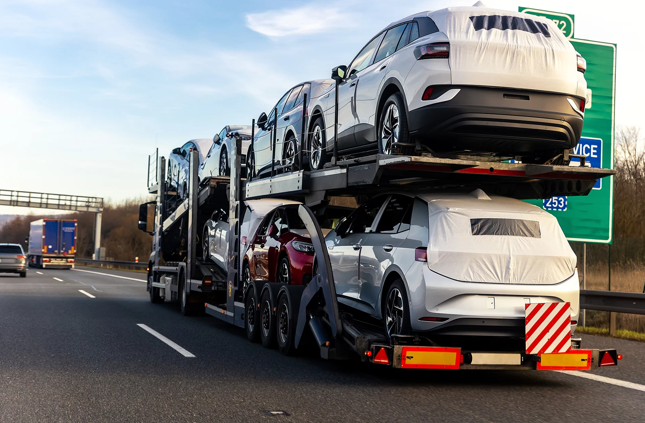
Classic car transport moves collector, vintage, and specialty vehicles with protection that everyday auto shipping rarely provides. You need the right trailer, clear valuation, and a carrier that understands low clearance, soft tops, and non-running cars before the truck arrives.
Key takeaways:
- Enclosed trailers protect paint, chrome, and interiors better than open racks for most classics.
- Confirm cargo coverage, your collector policy, and a written valuation before pickup.
- Ask for wheel straps, low-clearance ramps or a liftgate, and winch loading when the car cannot drive on.
- Cost rises with distance, enclosed capacity, season, and inoperable-vehicle fees.
- We are licensed and bonded, and we coordinate classic moves through a partner carrier network (DOT 3752961, MC 1332997).
What Makes Classic Car Transport Different
Everyday motor vehicle transportation focuses on getting a daily driver from A to B. Classic car shipping is different because the asset itself is the point: matching numbers, restored paint, rare trim, and a market value that can exceed the price of a new luxury car.
Low ground clearance, wide fenders, soft tops, and fragile emblems change how a driver loads and secures the car. A muscle car with long overhangs can scrape a steep ramp. An antique car shipping job may need a soft-tie strategy that never clamps onto painted rocker panels.
Vintage car transport also tends to involve tighter pickup windows around shows, auctions, and estate sales. Collectors often want door-to-door service, photo documentation, and enclosed capacity held for a specific date rather than the next open slot on a multi-car hauler.
Enclosed vs Open for Classic Cars
An enclosed classic car hauler keeps weather, road debris, and curious hands away from the vehicle. Open transport costs less and moves more cars per trip, but it leaves paint and glass exposed for the entire route. For most show cars and six-figure restorations, enclosed is the safer default.
| Factor | Enclosed | Open |
|---|---|---|
| Weather & debris | Fully shielded | Exposed to rain, hail, gravel |
| Privacy | High | Visible on the highway |
| Typical price | Higher | Lower |
| Availability | Fewer trailers | More capacity |
| Good fit for classics | Show cars, restorations, exotics | Driver-quality cars, short mild-weather moves |
If you are still weighing protection against budget, our guide to open vs enclosed car transport breaks down when each option fits.
Hard-sided vs soft-sided trailers
Hard-sided enclosed trailers use rigid walls and a roof, which offer the strongest barrier against weather and impact. Soft-sided units rely on heavy vinyl or fabric over a frame. They still keep rain and most debris off the car, yet they flex more in high wind and offer less protection from impacts.
Ask what the trailer floor height is, how cars are staged inside, and whether the unit is a single-car or multi-car setup. A dedicated single-car enclosed trailer reduces loading risk for ultra-low cars. Multi-car enclosed units can work well when the driver controls spacing and uses proper wheel restraints.
When open transport is acceptable
Open classic car transport can be acceptable for a driver-quality vehicle on a short route in mild weather when the car already shows road wear, and you accept exposure risk. It is a poor match for fresh paint, convertibles with aging tops, or cars headed straight to a judged show.
If you choose open transport for your classic, confirm soft-tie points, ask how the car will be positioned on the top or bottom deck, and schedule around forecast hail or ice. Never assume open pricing equals enclosed protection.
Trailer Features to Ask For
The trailer features you request for classic car transport should match how the car starts, steers, and clears the ground. Tell us the year, make, model, running condition, ride height, and any aftermarket body kits before we dispatch a partner carrier.
Liftgates and low-clearance ramps
A liftgate car carrier raises the car on a platform so it never faces a steep breakover angle. Low-clearance ramps or race ramps lengthen the approach so splitters and exhaust tips do not scrape. Either feature matters when you ship a muscle car with a lowered stance or long front overhang.
Share measured ground clearance and approach angles if you have them. A five-minute measurement at home can prevent a loading delay on pickup day.
Winch loading for non-running cars.
Non-running classic transport needs a winch, dollies, or both. The driver should pull the car straight, watch tire tracking, and never drag a locked wheel across the deck. Tell us whether the engine turns, whether the transmission is in neutral, and whether the brakes hold.
Inoperable cars usually cost more because loading takes longer and may require a second person. The added fee still costs less than repairing a frame rail damaged during a rushed load.
Tie-down method (wheel straps)
Wheel straps or soft loops that secure at the tires are the preferred method for restored classics. They avoid clamping onto suspension arms, painted control points, or aluminum underside pieces. Axle straps can work on some cars when the owner or restoration shop specifies approved tie points.
Ask the driver to avoid ratchet straps across soft tops, through open windows, or on delicate trim. A clean wheel-strap setup keeps the car planted without leaving strap marks on chrome.
Insurance and Valuation
Insurance for classic car transport is a layered conversation. The carrier’s cargo policy, your collector policy, and any agreed valuation on the bill of lading must line up before the car rolls onto the trailer.
Carrier cargo coverage vs. your own policy
Carrier cargo coverage has per-vehicle limits and exclusions, so it is not a substitute for an agreed-value collector policy.
Public liability is a separate layer. Under 49 CFR 387.9, for-hire carriers hauling nonhazardous property in interstate commerce with a GVWR of 10,001 pounds or more must carry at least $750,000 in public liability (BIPD) coverage. That protects the public after a crash; it does not set your car’s cargo payout.
Ask for the cargo limit per vehicle, deductibles, exclusions for classic or modified cars, and how claims are handled. Then call your insurer and confirm whether transit is covered under your collector policy and whether you need a trip endorsement.
Documenting condition and value
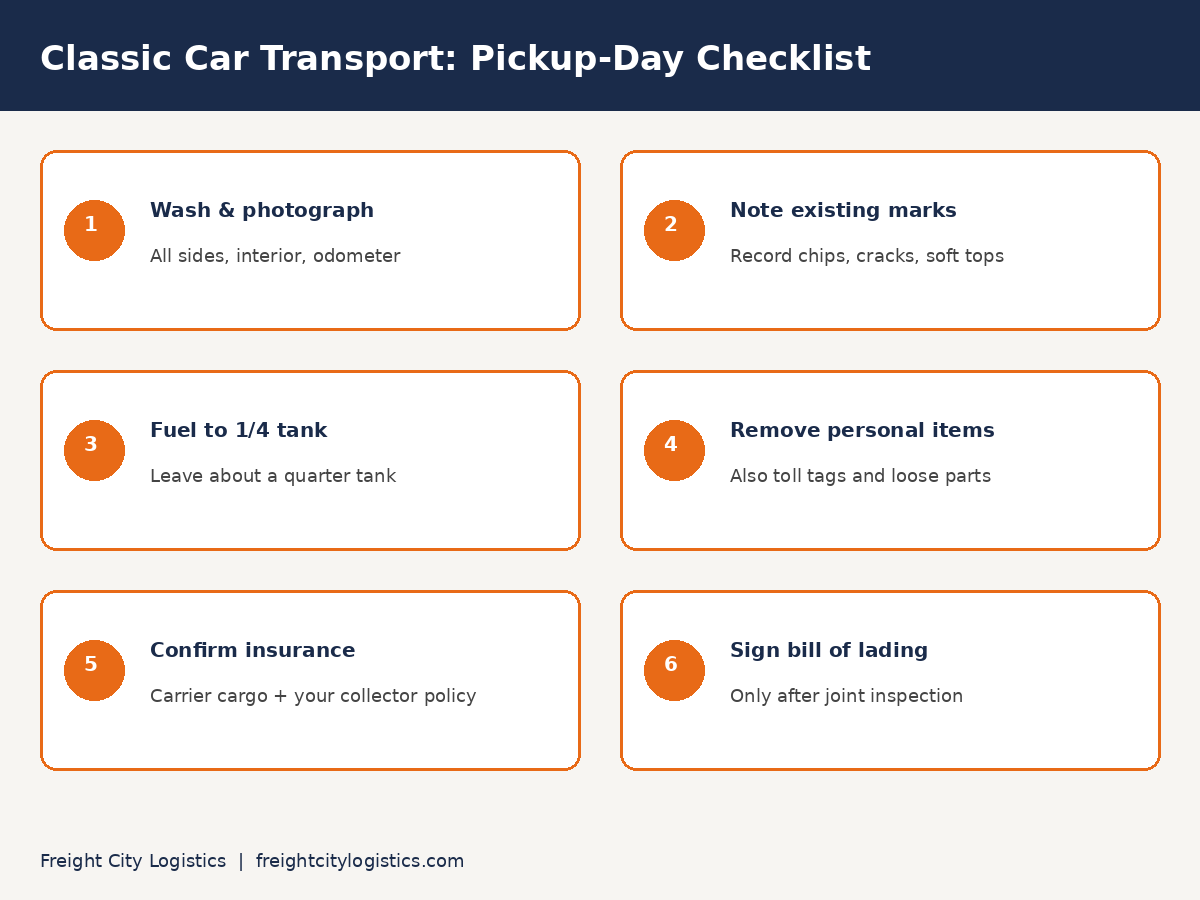
Document condition with dated photos of every panel, the interior, the undercarriage if accessible, and the odometer. Note existing chips, cracks, soft-top wear, and aftermarket parts in writing on the inspection section of the bill of lading.
For valuation, keep recent appraisals, auction comps, or build receipts handy. If the car’s market value sits well above a carrier’s standard per-car cargo cap, resolve the gap before pickup rather than after a claim.
What Affects Classic Car Transport Cost
Classic car transport cost is driven by distance, trailer type, route density, season, and whether the car runs. Enclosed capacity costs more than open. Cross-country lanes with steady classic volume are priced differently than remote rural pickups.
Inoperable fees, expedited windows, low-clearance equipment, and multistop routes also change the number. Door-to-door car shipping can cost more than a terminal drop-off, yet it saves you a separate drive to a depot. If your street cannot fit a long enclosed trailer, the driver meets you at the nearest safe spot.
We do not publish one-size-fits-all rates because fuel, capacity, and lane balance shift often. Share origin, destination, dates, and car details for a free, no-obligation quote that reflects current partner carrier capacity.
How to Prepare a Classic Car for Pickup
Preparing for classic car transport protects both the car and the inspection record. Wash the car so existing marks are visible, photograph every angle in good light, and remove loose parts, radar detectors, toll tags, and personal items.
Leave roughly a quarter tank of fuel, fold in mirrors if needed, disable noisy alarms, and set the parking brake only as the driver directs. For a full walkthrough, see our guide on how to prepare your car for shipping.
If the car sits on a battery tender, disconnect power cleanly and label the key. Soft tops should be fully secured. Convertible boots, tonneau covers, and removable hardtops need a clear plan so they are not lost or scratched in transit.
How to Choose a Classic Car Carrier
Choose a partner that verifies carrier authority, insurance filings, and equipment fit rather than quoting from a phone script alone. Ask for the USDOT and MC numbers of the carrier assigned to your classic car transport, and then confirm its active authority and insurance through FMCSA’s public carrier lookup.
Look for experience with collector car transport, clear communication on pickup windows, and written terms for delays, redelivery, and claims. Be wary of requests for large deposits to personal accounts, quotes far below market, or refusal to share carrier details.
We operate as a licensed and bonded broker coordinating through a partner carrier network across our service area. That model lets us match your car with enclosed capacity from carriers we have vetted.
Get a Classic Car Transport Quote
Here is how to ship a classic car with us:
- Share the year, make, model, running condition, and ride height.
- Choose enclosed or open transport and confirm your dates.
- Confirm cargo coverage, your collector policy, and the agreed value.
- Prepare the car and photograph every panel.
- Inspect the vehicle with the driver and sign the bill of lading.
- Inspect it again at delivery before you sign.
Ready for show car transport, a restoration move, or an estate vehicle? Tell us the car details, running condition, preferred dates, and whether you need enclosed transport. You can request a classic car quote, and we will coordinate a protected classic car transport plan with a vetted partner carrier.
Frequently Asked Questions
How much does it cost to ship a classic car?
Shipping cost for a classic depends on distance, enclosed versus open capacity, season, and whether the car runs. Short regional moves cost less than coast-to-coast enclosed trips. Share origin, destination, and car details for a current quote rather than relying on a generic online average.
Is enclosed transport worth it for a classic car?
It is worth it when paint, chrome, interior, or show condition matters more than saving on the haul. Most collectors choose enclosed for restorations, exotics, and cars heading to judged events. Open can work for driver-quality cars on short, mild-weather routes.
Can a non-running classic car be shipped?
Yes. Transport for non-running vehicles uses winch loading, wheel dollies, or both. Expect an inoperable fee, and tell the dispatcher whether the wheels roll freely, whether the steering locks, and whether the brakes hold, so the driver brings the right gear.
Does insurance cover collector cars in transit?
Coverage depends on the carrier’s cargo policy and your own collector policy. Carrier cargo limits may sit below a rare car’s market value, so confirm both policies and document agreed value before pickup. Public liability insurance is separate from cargo coverage for the car itself.
How long does classic car shipping take?
Classic car shipping timelines track distance, route, weather, and whether you booked standard or enclosed specialty capacity. Regional moves usually finish sooner once picked up, while cross-country enclosed lanes often take longer because fewer trailers run those routes. Your quote should separate the pickup window from driving days.
Protect Your Classic Before the Trailer Door Closes
Safe classic car transport is a sequence: match the trailer to the car, document condition and value, confirm coverage, and prepare the vehicle before the driver arrives.
When you want that sequence handled with clear communication and vetted capacity, our team at Freight City Logistics will coordinate it for you.