
Knowing how to prepare a car for shipping keeps pickup short, protects your claim trail, and helps the carrier load without delay. A clean car, clear photos, the right fuel level, and ready paperwork prevent most day-of problems for you and the driver.
Use the checklist below, then read the sections that explain why each step matters. We coordinate auto transport through partner carriers and can walk you through each step when you book.
Key takeaways:
- Wash the car, photograph every angle, and note existing damage before pickup.
- Remove personal items, toll tags, and loose parts; leave about a quarter tank of fuel.
- Have ID, keys, and order details ready for the bill of lading.
- Inspect again at delivery before you sign, and photograph any new damage.
- Learning how to prepare a car for shipping a day early leaves time to fix surprises like a weak battery or a missing key.
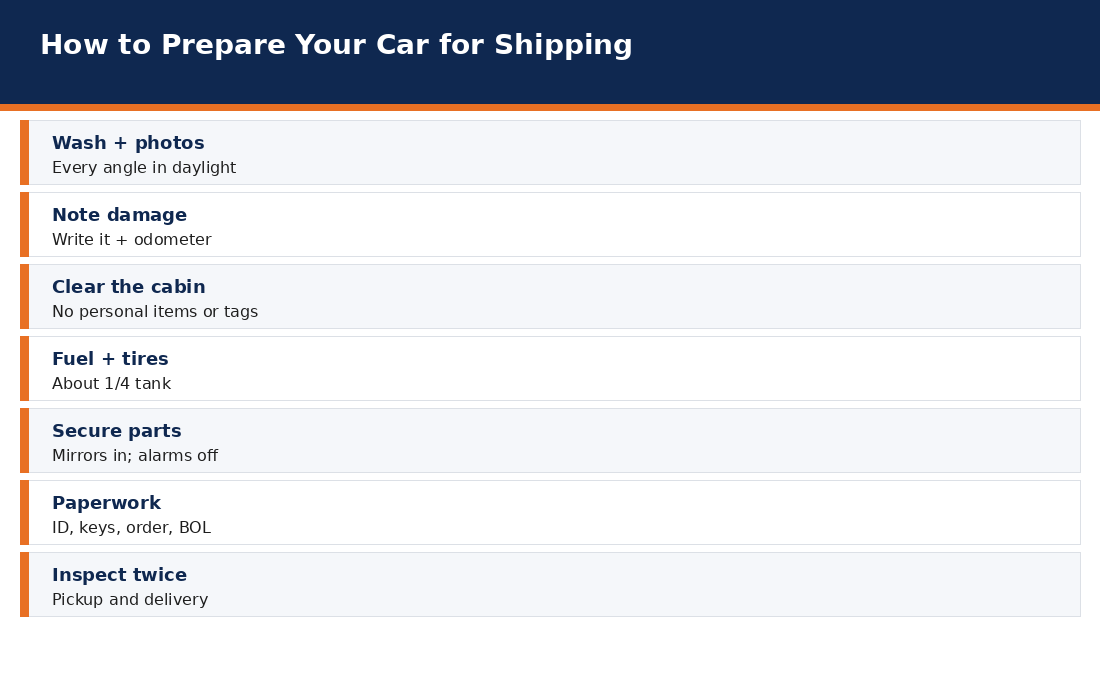
Quick Checklist: How to Prepare Your Car for Shipping
- Wash the exterior and vacuum loose debris.
- Photograph every angle, including the roof, wheels, and interior.
- Note existing scratches, dents, and the odometer reading.
- Remove personal items, garage openers, and toll tags.
- Leave about a quarter tank of fuel.
- Confirm the battery is charged and tires are inflated.
- Secure or remove loose parts; fold in mirrors; disable alarms.
- Set aside ID, keys, and your order confirmation.
- Walk the car shipping inspection with the driver at pickup.
- Repeat the inspection at delivery before you sign.
This car shipping checklist is the short version of how to prepare your car for shipping. The sections below explain why each step matters.
Before Pickup
Begin at least one day before shipping your car so you are not rushing when the truck calls. Prepare your vehicle for auto transport with photos, paperwork, and a clear interior.
For an overview of our services, see motor vehicle transportation.
Wash the car and photograph every angle
Wash the car so existing marks are visible in photos. Capture each side, the front, rear, roof, wheels, and any prior damage in daylight.
Keep copies on your phone and in email so you can compare them at delivery. That photo set becomes your baseline if you need to file a damage claim.
Note existing damage and the odometer reading
Write down scratches, chips, and dents, and record the odometer. If you are wondering what to do before shipping your car to protect a future claim, match your written notes to your photos so the paper trail is clean.
Store the notes with the same order confirmation you will show the driver. First-time shippers learning how to prepare a car for shipping often forget the odometer photo, so take one with the dashboard lit.
Remove personal items and toll tags
Carriers generally do not insure personal items in a shipped car. Remove luggage, electronics, and valuables. Take off toll tags and parking passes so you are not billed for tolls on the hauler’s route.
Fuel level, battery, and tire basics
Many owners ask how much gas to leave in the car for shipping. About a quarter tank is the usual guidance, enough to drive the car on and off the trailer without carrying extra weight.
Confirm the battery holds a charge and that tires are inflated to the sidewall recommendation.
If the battery is weak or a warning light is on, fix it before pickup. A car that will not start can turn a short pickup into a winch job with extra fees.
Secure or remove loose parts, fold mirrors, disable alarms
Remove or tape loose spoilers, antennas, and cargo racks, fold in the side mirrors, and turn off aftermarket alarms.
Tell your coordinator about non-standard spoilers or low ground clearance so the carrier brings the right ramps. Skipping that note is a common cause of pickup delays for modified vehicles.
Documents to Have Ready
Have a government ID, your order confirmation, spare keys if requested, and any lienholder release instructions available. If a lender holds the title, request its release letter when you book; leaving that until pickup week is a common snag for owners still working out how to prepare a car for shipping.
When door-to-door service is part of the move, confirm both addresses and access notes early; ask about door–to–door car shipping if you need curb pickup and delivery.
- Photo ID that matches the name on the order
- Order confirmation or booking reference
- Keys (and a spare if the carrier requests one)
- Lienholder release or third-party authorization letter, if someone else releases the car
- Printed or phone copies of your condition photos
A complete document set keeps the driver from waiting at the curb while you search for keys or paperwork.
If someone else will hand over the car, give them a copy of the order and your photos, and tell your coordinator their name and phone number. Part of how to prepare a car for shipping is making sure the person at the curb can sign for you.
At Pickup: Inspection and Bill of Lading
Walk around the car with the driver for the car shipping inspection, then sign the bill of lading only after its condition notes match what you see. In car shipping, the bill of lading is both your receipt and your condition report.
Under 49 CFR Part 395, drivers of property-carrying commercial motor vehicles (CMVs) generally may drive a maximum of 11 hours after 10 consecutive hours off duty. That limit is why pickup windows and transit estimates need realistic buffers.
Before the truck leaves, save a photo of the signed car shipping bill of lading on your phone. Knowing how to prepare your car for shipping includes protecting that paperwork as carefully as the car itself.
At Delivery: Inspect Before You Sign
Inspect the car in daylight when you can, compare it to your pickup photos, and note any new damage on the delivery copy before you sign. Once you sign a clean delivery receipt, claims become much harder.
If you find a new mark, photograph it next to the bill of lading note and call your coordinator the same day. To plan around delivery day, see our guide on how long car shipping takes.
Coordinators often remind shippers to keep the pickup photos open on their phone during the delivery walkaround. That habit makes it easy to spot a new mark before you sign.
Special Cases (convertibles, classics, non-running)
Convertibles should ship with the top up and secured. Classics and low-clearance cars may need enclosed transport or extended ramps; see classic car transport for collector-specific notes.
Non-running vehicles need winch-capable equipment and accurate weight. Electric vehicles should travel with the battery at the charge level the manufacturer recommends for storage, and you should tell us about aftermarket lowering kits before dispatch.
Special cases still follow the same car shipping checklist, but they need earlier photos and clearer notes so the carrier sends the right equipment.
For a non-running car, tell us whether it rolls, steers, and brakes, because the carrier needs to know if it can be winched straight onto the deck.
For a convertible, check the top seals before pickup, since open carriers expose the car to rain and road spray. That is how to prepare your car for shipping when it needs special handling.
Ready to Ship? Request a Quote
Pickup delays often come from cars that are not ready, missing keys, or surprise low clearance. Finish the checklist the day before, and tell us about modifications when you book.
If you want a second set of eyes on how to prepare your car for shipping, send photos of ground clearance and aftermarket parts with your quote request.
We are licensed and bonded (DOT 3752961, MC 1332997) and coordinate auto transport through our partner carrier network. When you are ready, request a quote and tell us about any special handling.
Frequently Asked Questions
How much gas should be in a car for shipping?
Leave about a quarter tank of gas. That is enough for the driver to load and unload your car and move it at the terminal, without carrying the extra weight of a full tank. Running close to empty can strand the car at pickup or delivery.
Can I leave personal items in my car?
You should not leave personal items in a shipped car. Most carriers exclude household goods and valuables from cargo coverage, and extra weight can change how the car sits on the trailer. Remove luggage, electronics, and toll tags before pickup.
What documents do I need to ship a car?
Bring a government photo ID, your order confirmation, and the keys. If a lienholder or another person must authorize release, have that letter ready. Keep copies of your condition photos so you can compare them to the bill of lading at pickup and delivery.
Do I need to clean my car before shipping?
Yes. Washing is the first step in preparing a car for shipping, because a clean car makes existing scratches and chips visible in photos and on the inspection form. Clear loose trash from the cabin, and photograph the car in daylight before the carrier arrives.
What should I do if I find damage at delivery?
Note the damage on the delivery receipt before you sign, photograph it clearly, and contact your coordinator the same day. Compare the mark to your pickup photos and the signed bill of lading so the claim file starts with complete evidence.
Prep Once, Ship With Fewer Surprises
Following a clear guide on how to prepare a car for shipping can make pickup and delivery easier to manage. A prepared car loads faster, claims less often, and gives you a clear paper trail at both ends. For help coordinating transport and understanding the preparation requirements, contact Freight City Logistics.
Complete the checklist the day before pickup and keep your condition photos handy at delivery. That way, you're ready before the truck arrives.