
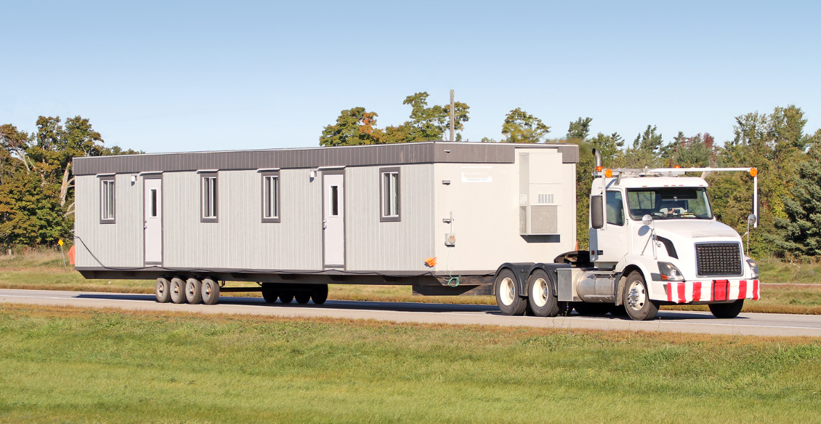
Learning how to move a mobile home means planning a permitting, logistics, and setup project, not a weekend DIY tow. You confirm the home can travel, clear destination rules, hire licensed movers, disconnect utilities, transport with escorts when required, and reinstall the home to code at the new site.
Key takeaways:
- Age, condition, and HUD-code status determine whether relocation is realistic.
- Single-wide and double-wide moves use different transport and reassembly plans.
- Permits, title, and tax clearances often take longer than the highway miles.
- Professional movers handle axles, escorts, and setup; DIY rarely saves money once you factor in the risk.
- We are licensed and bonded (DOT 3752961, MC 1332997) and coordinate specialized transport through our partner carrier network.
Can Your Mobile Home Be Moved?
Most mobile homes can be moved if the frame, floors, and title are in order and the destination will accept the home. Structural damage, soft floors, failed frames, or missing title paperwork can stop a move before a truck is assigned.
Age, condition, and HUD-code considerations
Homes built to the HUD Manufactured Home Construction and Safety Standards generally have a clearer path than older pre-code units. Further, 24 CFR Part 3280 sets federal construction requirements for manufactured homes built on or after June 15, 1976. Many parks and local jurisdictions use that date when deciding which homes they will accept.
Local rules still vary. Some parks refuse older homes even when federal construction standards were met. Confirm both the sending and receiving rules before you spend on transport.
Single-wide vs double-wide moves
A single-wide usually travels as one unit. To move a double-wide, crews split the sections, transport them separately, and rejoin them at the destination with marriage-line work, sealing, and systems reconnection. Double-wides cost more and need tighter scheduling between sections.
Manufactured home relocation for multi-section homes also needs more crane or rolling equipment at setup. Budget time for weather delays between the first and second sections.
Step-by-Step: How to Move a Mobile Home
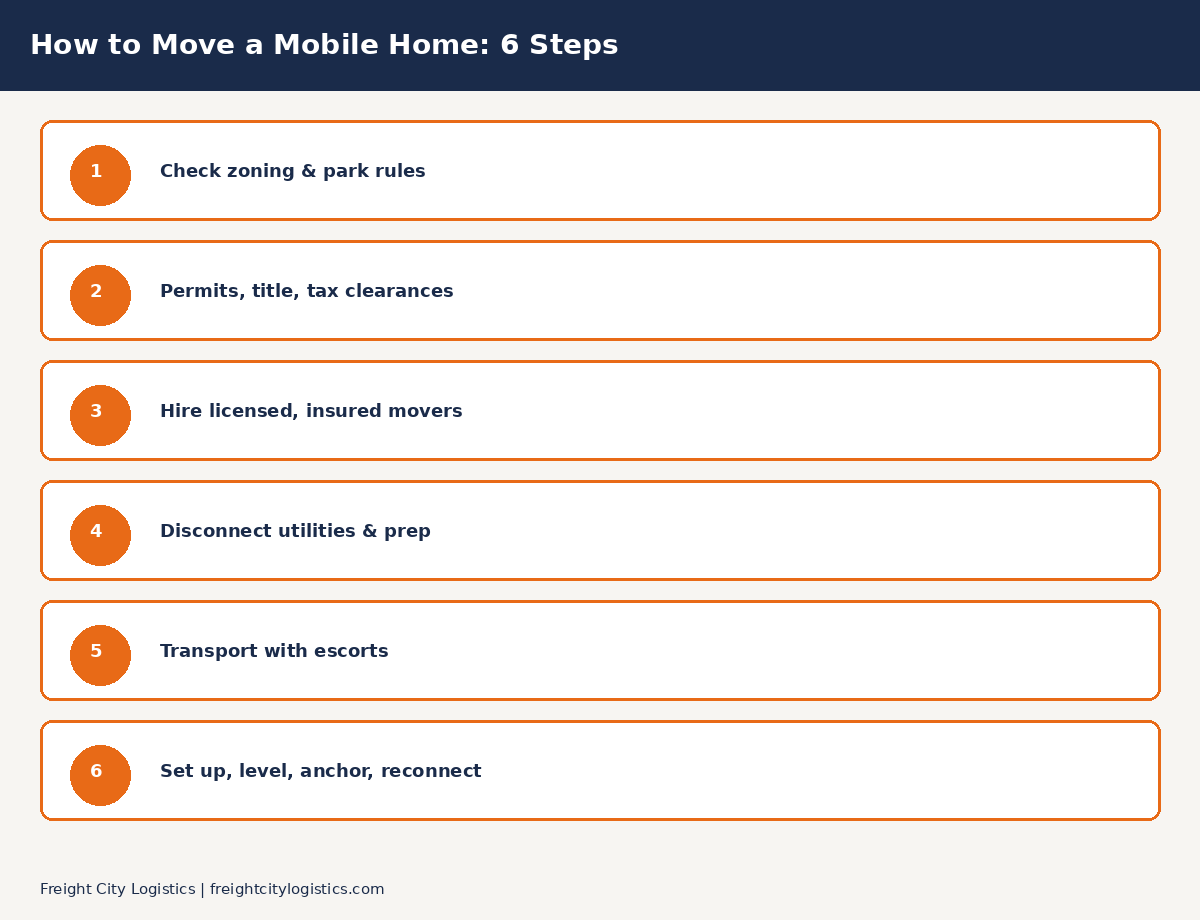
Use the sequence below as your operating checklist for moving a mobile home. Rules vary by state, so treat each step as a prompt to call the local housing authority and DOT permit office for your route.
Step 1: Check destination zoning and park rules
Confirm the lot or park accepts your home’s age, size, and foundation type. Ask about skirting, hitch removal, and setback rules. Moving the home into a community that later refuses setup is an expensive mistake.
Step 2: Permits, title and tax clearances
Secure a mobile home moving permit where required, clear property taxes, and confirm title status. Transport permits from state DOTs are separate from park approvals. Start paperwork early; filing windows often exceed driving days.
Step 3: Hire a licensed, insured mover
Choose specialists who move manufactured homes, not general household movers improvising with the wrong gear. Verify authority, insurance, and references for similar home lengths. Our mobile home movers page covers our specialized home-transport services.
Step 4: Disconnect utilities and prepare the home
Cap gas, disconnect electric service and water, empty plumbing, secure cabinets, and remove or strap exterior items. Decks, steps, and sheds usually move separately. Interior prep reduces shift damage when the home takes highway vibration.
Step 5: Transport with escorts
Mobile home transport on public roads often needs oversize permits, and a wide home may need a pilot car for mobile home transport on narrow routes. Escorts warn traffic and help with turns. Travel hours may be limited to daylight or non-rush windows, depending on the state.
Route surveys matter near low wires and tight town centers. Planning how to move a mobile home across state lines means stacking each state’s rules into one schedule.
Step 6: Set up, level, anchor, and reconnect
At the destination, crews level the home, complete mobile home setup and tie-down or anchoring per local code, reconnect utilities, and finish skirting and marriage lines on multi-section units. Final inspections may be required before occupancy.
What It Costs to Move a Mobile Home
How much to move a mobile home depends on distance, home type (single-wide or double-wide), permits, escorts, site prep, and setup scope. Local moves cost less than cross-country relocations. Difficult access, winter weather, and older homes that need extra bracing raise totals.
Knowing how to move a mobile home also means budgeting realistically. We do not publish a single national average because permit fees and labor markets vary. Share origin, destination, home dimensions, and year for a realistic quote. Cost planning also overlaps with specialized heavy transport pricing discussed in heavy equipment transport cost when oversize escorts dominate the bill.
Ask what the quote includes: blocking removal, transport, escorts, setup, and utility reconnection coordination. Surprises usually hide in the setup package, not the highway miles.
DIY vs Professional Movers
Can you move a mobile home yourself? Technically, yes, but towing a home without proper axles, brakes, permits, and insurance is unsafe and often illegal. Professional crews bring the running gear, escorts, and setup experience that keep the structure intact.
DIY attempts often fail on permits, marriage-line quality, or anchoring. The repair costs erase any imagined savings. Learning how to shift a mobile home the right way almost always leads to hiring experienced manufactured-home crews. Our guide to choosing mobile home movers lists the vetting questions to ask.
Common Mistakes
Skipping park approval, underestimating permit lead time, packing the home like a storage unit, and hiring the lowest unverified bidder are the usual mistakes. Another frequent miss is forgetting that the destination lot must be ready gravel, utility stubs, and access before the truck arrives.
Also confirm service area coverage and seasonal constraints on your route. If you are figuring out how to move a mobile home in peak storm or freeze season, add extra calendar buffer.
Photograph the home thoroughly before departure. Condition documentation protects you if questions arise after transport.
Give neighbors and the HOA notice if the destination is inside a community with narrow streets. Wide turns and temporary parking for the tractor and pilot cars need advance communication.
Insurance coverage should name the home while in transit and during setup. Ask whether cargo liability, towing liability, and worker coverage are documented before the hitch leaves the lot.
Weather windows matter. High winds can stop an oversize move mid-route, and rain can soften pads that were dry when the truck left origin. Build contingency days into the plan.
If the home sits on a permanent foundation today, removal may involve more labor than a typical park pull. Budget foundation work separately from the transport line. Keep a binder (digital or paper) with titles, tax receipts, park approvals, DOT permits, and the mover contract.
After setup, schedule appliance checks and a walk-through for floor squeaks, door alignment, and roof seams. Catching issues while crews are still on site is cheaper than calling them back a month later.
Request Mobile Home Moving Quote
Ready to plan the relocation? Request a quote with the home’s year, dimensions, single- or multi-section layout, and both addresses. We will help coordinate specialized transport capacity through our partner network.
From clearing a parking lot to relocating a manufactured home to owned land, we plan how to move a mobile home as a compliance-first project with clear communication at each stage.
Frequently Asked Questions
How much does it cost to move a mobile home?
The cost to move a mobile home depends on distance, home size, permits, escorts, and setup scope. Jobs that move a double-wide across a long corridor cost more than local single-wide relocations. Request a quote with the home’s dimensions, year, and both addresses for a current number.
Can you move a mobile home yourself?
Moving a mobile home yourself is rarely practical or lawful without proper equipment, permits, and insurance. Professional movers provide the axles, tires, escorts, and setup skills that protect the structure, keep the move legal, and reduce the risk of costly damage.
Do I need a permit to move a mobile home?
Most moves need state oversize transport permits, and many destinations require local moving or placement approvals. Title and property tax clearances may also be required before the home can leave. Check origin and destination rules early because filing windows vary by state.
Can older mobile homes be moved?
Many older mobile homes can be moved if they are structurally sound and the destination accepts them. Pre-HUD homes (built before June 15, 1976) face more park and lender restrictions. A mover or inspector should evaluate frame and floor condition before you book.
How long does moving a mobile home take?
Paperwork and site prep often take longer than the drive itself. Local moves may finish in days once permits clear; complex multi-section or multi-state moves can span weeks of scheduling. Build in extra time for weather, inspections, and utility reconnection.
Move the Home Only After the Paperwork Clears
Miles are the easy part once permits, park rules, and setup plans are in place.
When you want a coordinated plan for how to move a mobile home without learning the hard lessons on your own frame rails, Freight City Logistics will coordinate the move with you.