
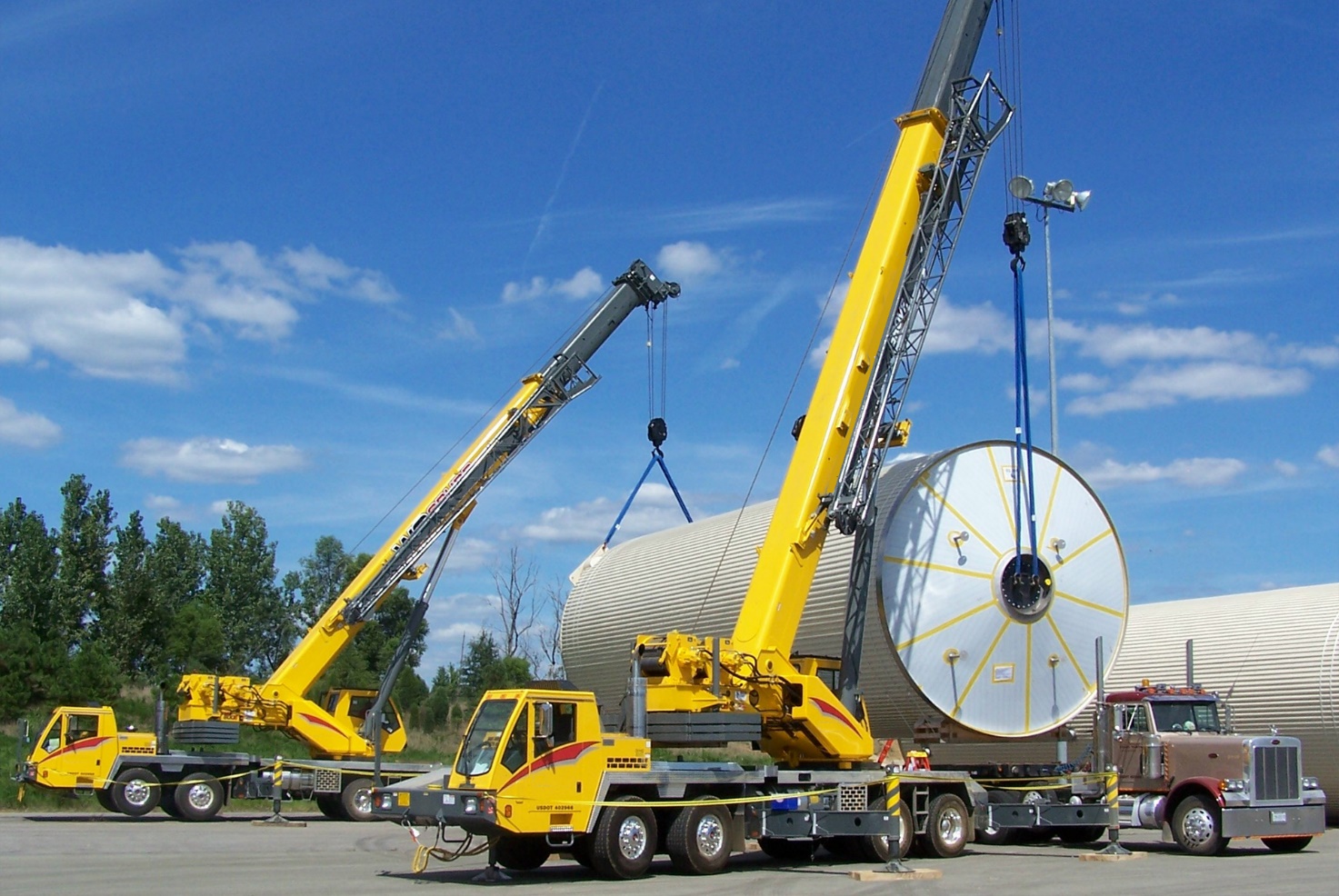
Learning how to transport a crane safely starts with the machine type, the load list, and the permits your route will need. Truck-mounted units, crawlers, and tower cranes each ship on different trailer plans, so a one-size quote almost always fails on pickup day.
Below, we cover crane types, a practical move sequence, offload and rebuild issues, cost drivers, and the mistakes that stall job-site mobilizations. We coordinate these moves through a licensed partner carrier network, so one team can plan the crane and the rest of your project equipment.
Key takeaways:
- Identify the crane type first; truck-mounted, crawler, and tower units ship differently.
- Build a per-load weight and dimension plan before you choose trailers or file permits.
- Disassembly, permits, escorts, and securement drive schedule and total cost.
- Under 49 CFR 393.106, tiedown working load limits must total at least half the cargo weight.
- We coordinate crane moves through a vetted partner carrier network.
Crane Types and How Each Is Transported
The first step in deciding how to transport a crane is identifying what you are shipping. Configuration, boom length, and counterweight count decide whether you need one trailer or a convoy.
When teams skip that step, quotes change on pickup day because a one-truck assumption turns into three trailers and overnight escorts. Our heavy equipment transport team starts every crane request with that configuration check, because an hour spent on details usually saves a day of scramble later.
| Crane type | Can it travel on its own? | Typical load count |
|---|---|---|
| Truck-mounted and rough-terrain | Sometimes, for short distances in road mode where state rules allow | Carrier unit plus extra loads for counterweights and attachments |
| Crawler | No | Multiple loads; confirm with the OEM shipping chart |
| Tower | No | Multiple loads by component; confirm with the erection plan |
Truck-mounted and rough-terrain cranes
Mobile crane transport often starts with a truck-mounted or rough-terrain unit that can travel short distances in road mode when lights, axles, and boom stowage meet state rules. Longer lanes usually place the machine on a lowboy or RGN so axle loads stay within bridge formulas and the boom rides secured.
Crawler cranes (disassembled, multi-load)
Crawler crane transport almost always means a multi-load move. The carbody, tracks, boom sections, and counterweights travel on separate trailers, and the OEM shipping chart sets the legal splits. Crane counterweight transport alone can fill several decks on a large machine.
Tower cranes
Tower crane transport ships by component: mast sections, jib, slewing unit, and counterweights. Erection crews and assist cranes at both ends must be scheduled against the convoy, not after the first truck arrives.
Step-by-Step: How to Transport a Crane
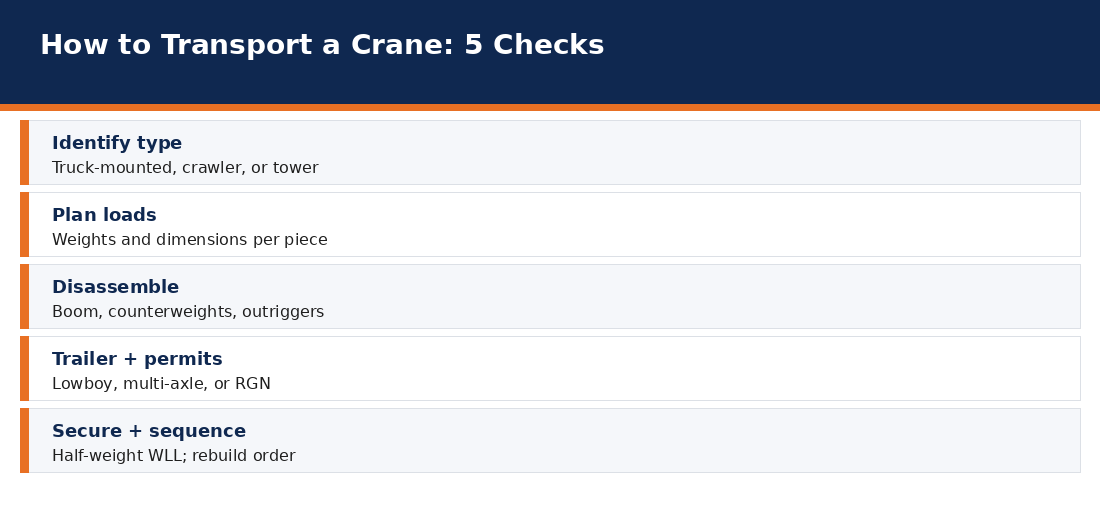
It comes down to five steps: plan every load, disassemble to legal dimensions, match trailers, permit the route, and secure each deck. This sequence mirrors the checks we run before tendering crane work to a partner carrier, whether the move runs between yards or job sites.
- Plan weights and dimensions for every load.
- Disassemble the boom, counterweights, and outriggers.
- Choose a lowboy, multi-axle, or RGN trailer.
- Obtain permits, escorts, and a route survey.
- Secure and sequence each load.
Plan weights and dimensions per load
List every component with shipping weight, length, width, and height. Accurate specs matter because every carrier plans transporting a crane from those numbers. Include sling points, center of gravity, and any pieces that must travel upright.
Disassemble boom, counterweights, and outriggers
Crane disassembly for transport follows the OEM manual, not a field improvisation. Remove boom sections, counterweights, and outriggers in the order the chart requires, and tag hardware so reassembly matches the same sequence.
Do not leave fluids, loose toolboxes, or unmarked inserts on the deck. Those details slow inspections and create claims risk during transit, and the same prep applies when you plan how to transport a bulldozer or another tracked machine.
Choose the trailer (lowboy, multi-axle, RGN)
Trailer choice follows axle weights and loaded height. Lowboys and RGNs handle many mobile units; multi-axle decks spread heavier crawler packages.
Trailer fit is one of the top reasons a plan for how to transport a crane gets rewritten late. Our specialized equipment services team matches specialized decks and escorts to oversize freight before permits are filed.
Permits, escorts, and route survey
An oversize crane permit is required whenever dimensions or weight exceed state legal limits. Multi-state lanes can need different escort counts on each segment, so build lead time around holiday weeks and weekend travel bans.
Route surveys catch low wires, weak bridges, and turns that look fine on a map but fail with a boom section on deck.
Secure and sequence the loads
Securement is not a place to improvise. Under 49 CFR 393.106, the aggregate working load limit of any securement system must be at least one-half the weight of the article or group of articles. Sequence trucks so critical rebuild parts arrive first. Arrival order should match the assembly manual.
Job-Site Offload and Reassembly Considerations
Confirm crane pads, swing radius, overhead lines, and gate width before the convoy rolls. Offload planning is the stage of how to move a crane that teams most often underestimate, and soft ground or blocked access can turn a planned half-day offload into overtime for drivers and ironworkers alike.
Stage assist equipment and taglines before the first trailer backs in. For related job-site machine moves, see our guide to construction equipment shipping. Keep radio contact between the driver, rigger, and site lead so each load lands in rebuild order.
Cost Factors
We do not publish blanket per-mile prices. When you plan transporting a crane, the price depends on machine mix and routing. Crane transport cost rises with load count, trailer type, permit fees, escorts, distance, and whether crews must work nights or weekends.
Share the OEM shipping chart, dates, and both site photos when you request pricing. For a broader view of heavy-haul pricing drivers, review heavy equipment transport costs.
If several machines share a mobilization window, ask for one quote that covers all the crane hauling and support loads so permits and escorts can be shared. Bundled crane shipping is also easier to sequence on site.
Common Mistakes
- Booking from a photo instead of a verified load list.
- Ignoring state weekend and holiday travel restrictions.
- Leaving counterweights unmarked so reassembly stalls.
- Skipping a route survey on urban or bridge-heavy lanes.
- Scheduling offload crews after the first truck is already en route.
Avoiding these mistakes is a core part of knowing how to transport a crane without burning crew days. Learning how to move a crane safely also means naming one project owner for permits, carrier updates, and site access.
Request Crane Transport
We are licensed and bonded (DOT 3752961, MC 1332997) and coordinate crane moves through our partner carrier network. Send the crane make and model, shipping chart, origin, destination, and target dates, and we will verify weights, insurance, and trailer fit, and then coordinate permits and status updates through delivery.
Start on our contact us form and attach photos of both sites when you can. Clear access notes are one of the simplest ways to prevent day-of delays.
Frequently Asked Questions
How do you transport a crane?
How to transport a crane depends on its type. You build a per-load weight and dimension plan, complete disassembly as needed, place components on suitable trailers, secure each deck, and haul under the required permits and escorts. Reassembly follows at the destination with planned assist equipment.
Can a crane be driven on the road?
Some truck-mounted and rough-terrain cranes can travel short distances in road configuration when axles, lights, and boom stowage meet state rules. Most crawler and tower cranes cannot. Longer lanes usually use a lowboy or RGN trailer so axle weights and boom clearances stay legal.
How many trucks does it take to move a crane?
A compact rough-terrain unit may move on one or two trucks. Large crawler packages can need a convoy for the carbody, boom sections, and counterweights, and tower cranes ship by component. The OEM shipping chart is the most reliable starting point for your exact load count.
Do crane moves need permits and escorts?
Yes, whenever dimensions or weight exceed state legal limits. Thresholds vary by state, so the same load can need escorts on one segment of a multi-state route and none on another. Build permit lead time into the schedule, and allow buffer days around holiday weeks.
How much does crane transport cost?
Pricing depends on load count, distance, trailer type, permits, escorts, and loading labor. Share accurate weights, dimensions, and dates for a lane-specific quote instead of relying on a generic per-mile figure, which rarely holds once permits and escorts are added.
Plan the Move Once and Ship With Confidence
Crane mobilizations succeed when the load list, permits, and offload plan are finished before the first truck is assigned. If you want a licensed, bonded team to plan to transport a crane and coordinate the move through a vetted carrier network, reach out to Freight City Logistics.
If you are still deciding how to transport a crane, gather the load list and site photos before you request pricing, and confirm who on your team signs off on dates and permits.