
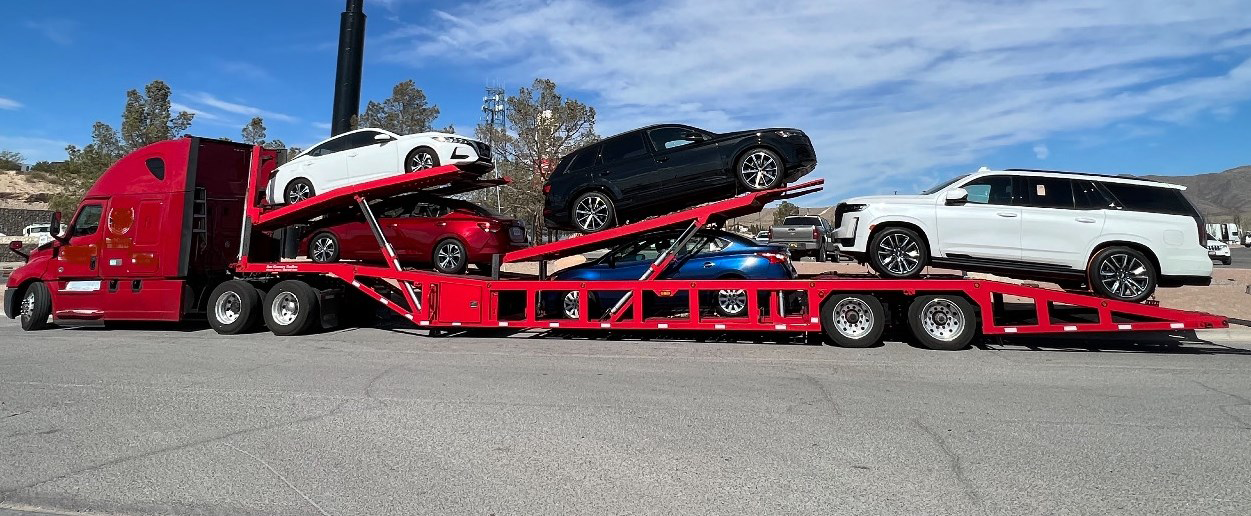
Choosing open vs. enclosed car transport comes down to protection, price, and how soon you need the truck. Open trailers move most daily drivers at a lower rate, while enclosed trailers add a roof and sides for high-value or freshly painted vehicles.
This guide compares both options side by side, explains cost drivers, and gives a short checklist so you can book with confidence. We coordinate vehicle moves through a licensed partner carrier network and can quote either trailer type for your lane.
Key takeaways:
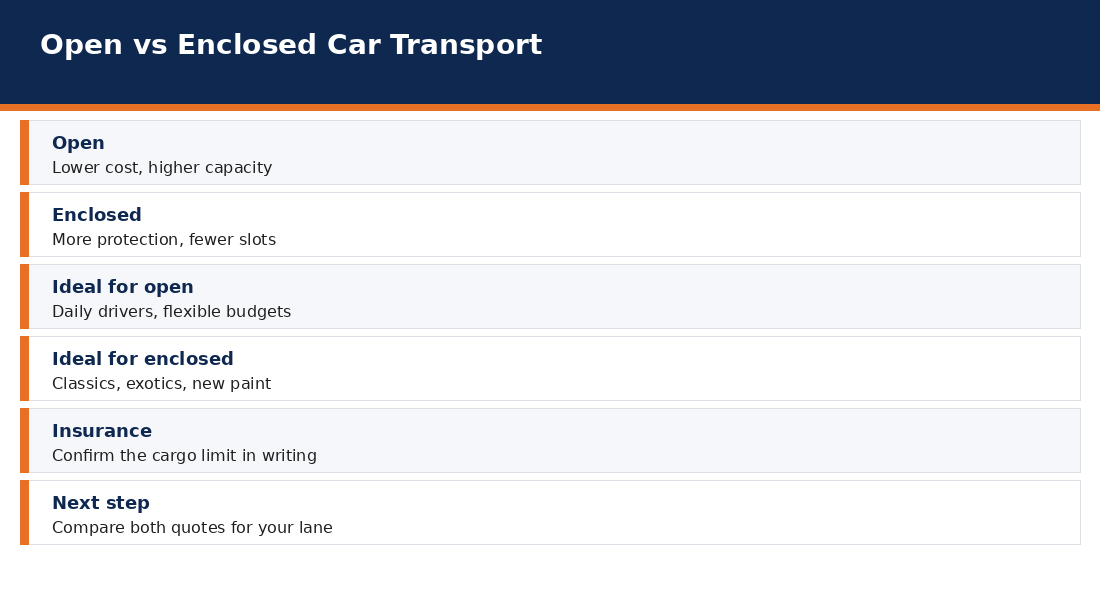
- Open carriers cost less and move more cars; enclosed carriers add weather and road-debris protection.
- Enclosed auto transport usually costs more and can take longer to schedule because capacity is tighter.
- Choose enclosed for classics, exotics, and fresh paint; open works for most daily drivers.
- Cars are high-value freight, so confirm the carrier’s cargo insurance limit before pickup on either trailer type.
- Share your vehicle type, dates, and budget so we can match the right open or enclosed option.
Open vs. Enclosed Car Transport at a Glance
Use this snapshot when you are deciding on open vs. enclosed car transport for a single vehicle or a small-fleet move.
| Factor | Open carrier | Enclosed carrier |
|---|---|---|
| Price | Usually lower | Usually higher |
| Protection | Exposed to weather and road debris | Roof and sides reduce exposure |
| Capacity | Higher; multi-car haulers common | Lower; fewer slots per truck |
| Scheduling | Often faster to fill | Can take longer to match capacity |
| Ideal for | Daily drivers, most used cars | Classics, exotics, show cars, new paint |
| Drawbacks | Weather exposure | Higher cost and tighter availability |
Verdict: pick open when budget and speed matter most. Pick enclosed when paint, provenance, or low ground clearance justify the premium.
What Is Open Car Transport
Open car transport moves your vehicle on an uncovered multi-car trailer, the two-level carriers you see on the interstate. Each car rides on an upper or lower deck, held by wheel straps or nets, and stays exposed to weather and road dust for the whole trip.
When open vs. enclosed car transport is framed only as a price question, shippers often miss that open fleets also offer more departure options on the same corridor.
Open auto transport is the default for most consumer moves because open carriers cost less and run more frequently on popular lanes. If you want related service details, see our motor vehicle transportation page.
What Is Enclosed Car Transport
Enclosed auto transport ships your vehicle inside a covered trailer, so the paint, glass, and interior are shielded from rain, sun, and road debris. Soft-sided enclosed units use a fabric shell over a frame, while hard-sided trailers use solid walls and a roof, and most carry fewer cars per load.
That capacity difference is why open vs. enclosed car transport quotes diverge even on identical miles.
The enclosed vs open car hauler choice often hinges on whether the car can tolerate road grit, rain, and sun for several days. Collectors who need to protect their car during shipping usually prefer enclosed decks for that reason.
Hard-sided units add impact resistance; soft-sided enclosed trailers still block weather and are often lighter and easier to source.
Price Difference
Enclosed car transport cost is typically higher than open because fewer cars fit on the trailer and specialized equipment is scarcer. Exact gaps vary by season, lane, and vehicle height.
Ask for both numbers before you decide, because transport premiums change with snowbird season, holiday weeks, and oversize or inoperable cars.
We quote open and enclosed options side by side for your lane instead of citing a single national percentage. Percentages published online are often unverified, so ask us for a current comparison that matches your dates and vehicle.
Door-to-door service, inoperable vehicles, and rush dates can increase the cost of either option. These factors can also affect delivery schedules, so it's worth understanding how long car shipping takes before choosing a transport option.
Protection and Insurance
Open trailers expose paint to weather and highway debris. Enclosed trailers reduce that exposure. If you are asking “Is enclosed car shipping worth it?” for a rare or freshly finished car, the answer is usually yes.
Insurance matters on both trailer types because vehicles are high-value freight. According to the Bureau of Transportation Statistics, motorized vehicles are among the leading U.S. freight commodities by value, and trucks carry the largest share by value for shipments moved less than 2,000 miles.
Before pickup, ask for the carrier’s certificate of insurance and confirm that its cargo limit covers your car’s value. Your personal auto policy may not cover transit the same way a cargo policy does, so read both documents before you compare open vs. enclosed car transport quotes.
Availability and Scheduling
Open capacity is usually easier to find on major corridors. Enclosed fleets are smaller, so popular lanes can book out during peak moving months, snowbird season, or around collector-event weeks.
That is why open vs. enclosed car transport scheduling should start with your hard dates, then work backward to trailer type, not the other way around.
If your dates are flexible by a few days, you often get a better rate and a faster truck assignment, whichever trailer you choose. Tight windows may require a dedicated enclosed run.
When you need origin and destination service at both ends, ask about door–to–door car shipping at quote time.
For example, if a collector in Florida needs an enclosed slot to Michigan in March, we can price an open alternative on the same dates so you can weigh a longer wait against a weather-exposed deck.
Which Vehicles Suit Each Option
Most sedans, SUVs, and light trucks ship fine on open trailers. Classics, exotics, convertibles with soft tops, and cars with new paint or vinyl wraps are stronger candidates for enclosed decks.
If you are still unsure, request open vs. enclosed car transport options for the same pickup window and compare insurance certificates next to the price.
Low-clearance sports cars may need a trailer with extended ramps either way. For collector moves, see our notes on classic car transport. Modified or lowered cars should share ground-clearance photos before dispatch so the carrier brings the right ramps.
How to Decide: Quick Checklist
- Is the vehicle a daily driver or a high-value collector car?
- Will fresh paint, wrap, or soft-top fabric sit exposed for several days?
- How firm are your pickup and delivery dates?
- Does the quote include door-to-door service or a terminal drop?
- Have you compared insurance certificates and cargo limits for each open carrier vs. enclosed carrier you are considering?
- Can you be flexible by two or three days to improve enclosed availability?
If three or more answers point to protection over price, enclosed transport is usually the better fit for your car.
Request an Open or Enclosed Quote
Most shippers decide faster once they see both numbers on the same lane. We price open and enclosed options together so you can weigh protection against schedule without calling two different desks.
Share operable status and ground clearance when the car is lowered or modified, because ramp angle matters on either trailer type.
We are licensed and bonded (DOT 3752961, MC 1332997) and coordinate vehicle moves through our partner carrier network. Send year, make, model, operable status, origin, destination, and preferred dates, and we will match an open or enclosed partner carrier and confirm insurance before dispatch.
Start on our request a quote page and note whether you need door-to-door service so we route the request correctly.
Frequently Asked Questions
Is enclosed car transport worth it?
Enclosed transport is worth it when the vehicle is rare, expensive, freshly painted, or sensitive to weather and road debris. For most daily drivers, open transport is adequate, costs less, and assigns faster on major lanes. Ask for side-by-side quotes so you can see the premium for your exact dates.
How much more does enclosed transport cost?
Enclosed usually costs more than open because capacity is limited and equipment is specialized. Exact differences depend on lane, season, and vehicle size, so request a side-by-side quote for your dates instead of relying on a national percentage you see online.
Is open transport safe?
Yes. Open transport is safe for most vehicles when the carrier secures the car with proper tiedowns and carries adequate cargo insurance. The main tradeoff is exposure to rain, sun, and road debris, not a higher accident risk, so most daily drivers ship on open trailers without issues.
Does enclosed shipping take longer?
It can. Enclosed fleets are smaller than open fleets, so matching a truck may take longer on the same lane, especially around peak moving months or collector events. Flexible dates of two or three days often shorten the wait without changing the trailer type.
Which is better for a new car?
A brand-new or newly painted car often benefits from enclosed shipping to reduce chip and weather risk during transit. A standard used daily driver usually ships fine on an open trailer when insurance limits are confirmed, and the carrier uses proper wheel restraints.
Match the Trailer to the Car, Not the Other Way Around
The right answer to open vs. enclosed car transport is the one that fits your vehicle’s risk and your schedule. When you want a licensed, bonded team to coordinate either option, reach out to Freight City Logistics.
Share the vehicle details early, compare both trailer types on the same lane, and book the option that protects the car you actually own, not the one that only looks cheaper online.