
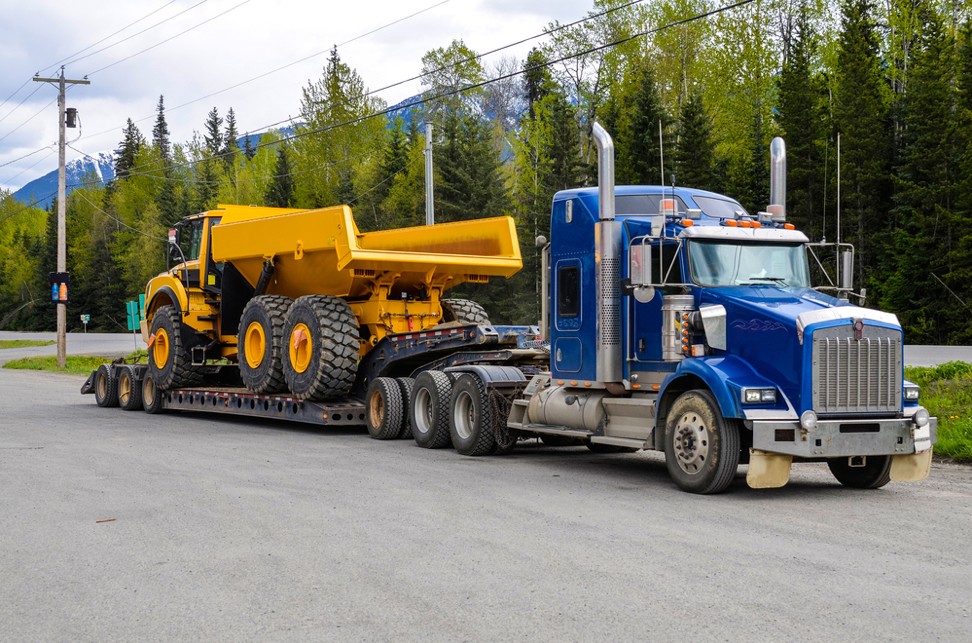
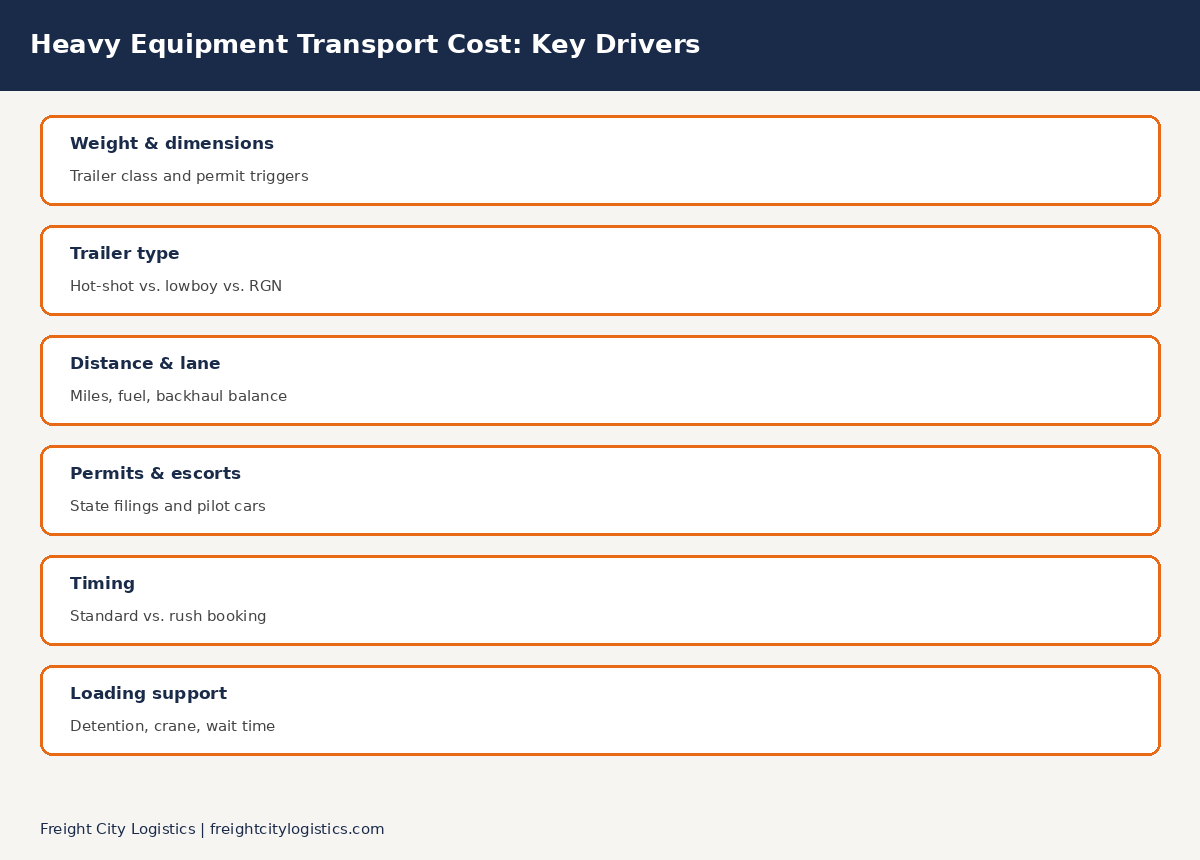
Heavy equipment transport cost is driven by machine weight and size, the trailer required, distance, permits, escorts, timing, and how long trucks wait to load or unload. Accurate specs produce accurate numbers; incomplete specs produce change orders after the truck is already rolling.
Key takeaways:
- Trailer class and permit status usually move price more than raw miles alone.
- Federal gross weight limits on the Interstate System and state oversize rules shape when permits begin.
- Rush bookings, weekend work, and detention add line items quickly.
- A complete spec sheet is the fastest path to a usable equipment shipping quote.
- We are licensed and bonded (DOT 3752961, MC 1332997) and price each move through our partner carrier network.
How Much Does Heavy Equipment Transport Cost?
It is set by the machine’s weight and dimensions, the trailer it needs, the distance and lane, and any permits or escorts. A compact machine on a short legal-size haul costs far less than an overweight, multi-state RGN move with escorts, so every quote is lane-specific.
As a planning frame only, shippers often see lower totals on short legal-size hot-shot lanes and much higher totals when permits, pilot cars, and multi-axle trailers enter the picture. Ask for a lane-specific number rather than relying on a blog average. For methods, see our heavy equipment transport service page.
Cost Drivers
Understanding heavy haul pricing starts with the drivers below. Each one can outweigh a small change in mileage.
Equipment weight, width, height, and length
Heavier and wider machines need more axles, different trailers, and sometimes escorts. Height can force route detours under bridges and wires. Length affects overhang and turn requirements at both sites.
Under 23 CFR 658.17, the maximum gross vehicle weight on the Interstate System is generally 80,000 pounds, and heavier nondivisible loads need special state permits. That threshold is why heavy equipment transport cost jumps when your machine pushes the truck into permit territory.
Width works the same way. Most states treat 8 feet 6 inches (102 inches) as the standard legal width; wider loads usually need an oversize permit, and state rules vary.
Trailer type required
Hot-shot and tag trailers price differently from step decks, lowboys, and RGNs. Lowboy trailer rates reflect scarce specialized capacity. If the machine can only load on an RGN, do not expect a hot-shot quote to hold. Our excavator transport guide shows how boom and counterweight configuration changes the trailer.
Distance, lane and fuel
Miles matter, and so does lane balance. A backhaul-friendly corridor can price better than a deadhead-heavy rural lane at the same distance. Fuel surcharges track market diesel prices, so equipment hauling rates move even when the truck type stays constant.
Permits, escorts and route restrictions
Oversize load permit cost varies by state, axle configuration, and whether the move is single-trip or annual. Pilot car or escort requirements add daily fees and scheduling complexity. Restricted travel hours can stretch calendar time without changing the linehaul miles.
Timing and urgency
A standard booking waits for a matching truck. A rush booking pays for priority outreach and sometimes empty miles. Weekend or holiday loading can add surcharges. If your pad pour date is fixed, say so in the request.
Loading, unloading, and wait time
Detention charges appear when crews, cranes, or gate access are late. Self-loading machines save time; non-running machines that need a winch or on-site crane add labor. Site readiness is part of heavy equipment transport cost even when it never appears in the first email quote.
Typical Cost by Equipment Type
The table below compares relative cost by equipment type; your lane, permits, and timing set the actual number.
| Equipment example | Typical trailer | Relative cost signal |
|---|---|---|
| Skid steer / compact unit | Hot-shot / tag | Lower on short legal lanes |
| Backhoe / small loader | Step deck/tag | Moderate |
| Midsize excavator/dozer | Lowboy / RGN | Higher; permits common |
| Large excavator / industrial | RGN multi-axle | Highest; escorts likely |
| Machine with wide attachments installed | Depends on dimensions | Permit-driven premiums |
Construction-focused moves also appear in construction equipment shipping, which pairs with this cost discussion when you are mobilizing a full spread.
Hidden and Add-On Charges
Watch for permit fees billed separately, escort days, tolls, layover hotels on long oversize routes, redelivery, and cancellation fees after a truck is dispatched. Crane rental at origin or destination is often outside the trucking quote entirely.
Boat and other specialty lanes have their own add-on patterns; if you are comparing categories, boat transport cost shows how dimensions and permits shape a different niche. The lesson is the same: ask what is included before you celebrate a low linehaul number.
How to Reduce Heavy Haul Costs
Share complete specs on the first request. Flexible dates help carriers avoid empty miles. Remove or fold attachments that push height or width into a higher permit class when operations allow.
Consolidate compatible machines when legal and safe. Stage the site so the truck loads on arrival. Avoid “urgent” labels unless the date truly requires them. Those steps lower heavy equipment transport costs more reliably than shopping for the single cheapest unverified quote.
Also confirm whether the machine runs. An operable unit that climbs the ramps under its own power usually costs less than a non-running machine that needs winching and extra labor.
Details to Have Ready for a Fast Quote
- Make, model, year, and serial number (if available)
- Operating weight and shipping dimensions (width, height, and length)
- Attachments on or off
- Running condition and self-loading ability
- Origin and destination access notes and hours
- Target dates and flexibility
With that list, an equipment shipping quote can move from guesswork to a number you can take to a project budget meeting.
If you are budgeting the cost to ship heavy equipment for the first time, separate linehaul, permits, escorts, and site services in your spreadsheet. Bundled marketing numbers hide which lever you can still control.
Escort and pilot car cost deserves its own line because some states require two pilots on certain widths or night moves. Ask whether escort days are estimated or capped.
Project controllers should also track cancellation terms. A truck already rolling toward your yard creates a different financial risk than a quote that was never covered.
For dealers and rental fleets, repeating the same origin-destination pairs builds lane history that stabilizes heavy equipment transport cost over a quarter. One-off remote recoveries usually price as exceptions.
Photograph the machine on a level surface with a tape reference when possible. Dispatchers price what they can verify; fuzzy phone photos of a muddy yard invite padding.
If two brokers return very different numbers on identical specs, ask each one which trailer and permit assumptions they used. Comparing apples to apples matters more than chasing the lowest teaser rate.
We would rather explain a higher transport cost that includes permits and realistic detention than win a bid that fails on the first oversize filing.
Keep your internal stakeholders aligned on whether the move is date-certain. A date-certain move raises cost because you are paying to reserve capacity; a flexible move can wait for a matching truck.
Request a Heavy Equipment Quote
Ready for a lane-specific number? Contact us to request a quote with the checklist above, and we will price the trailer, permits, and timing through our partner carrier network.
For a single machine or a recurring program, we treat heavy equipment transport cost as a planning input you can defend, not a teaser rate that collapses after booking.
Frequently Asked Questions
How much does it cost to transport heavy equipment?
Cost depends on weight, dimensions, trailer type, distance, permits, escorts, and timing. Compact legal-size moves cost less than overweight, multi-state RGN hauls. Send your machine specs and both addresses for a current quote rather than relying on a generic average.
What is the average heavy haul rate per mile?
Heavy haul cost per mile varies widely by trailer class and whether the load is permitted. Per-mile averages hide permit, escort, and fuel charges, and short hauls often carry minimums. Ask for an all-in estimate for your specific lane and machine.
Why are oversize loads more expensive?
Oversize loads need specialized trailers, state permits, possible escorts, restricted travel hours, and more planning time. Each of those costs stacks on top of linehaul and fuel. Route surveys and detours around low bridges or weight-restricted roads can add miles and days.
Does the quote include permits?
Not always. Some quotes bundle permits, while others list them as pass-through fees billed after filing. Confirm in writing who files each state permit, who pays the fees, and what happens to the schedule and cost if a state delays approval.
How can I get a more accurate quote?
Send verified weight and dimensions, attachment plans, running condition, access notes at both sites, and your target dates. Clear photos of the machine help. The more complete the request, the less room there is for surprise accessorial charges after booking.
Price the Move You Actually Have
The cheapest headline rate is meaningless if the trailer, permits, or site time were never in the bid.
When you want heavy equipment transport costs grounded in real specs and vetted capacity, Freight City Logistics will price it from your specs.