
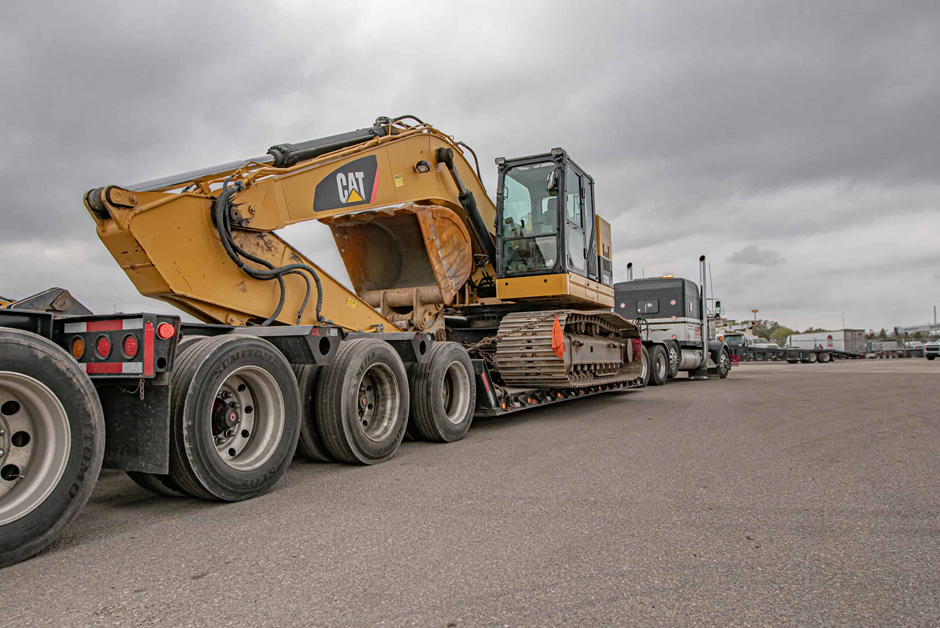
Excavator transport starts with matching the machine’s weight, width, and height to the right trailer, then securing it under federal cargo rules and clearing any oversize permits on the route. This guide covers trailer choice, limits, securement, prep, self-haul versus hiring, and what drives excavator shipping cost.
Key takeaways:
- Match mini excavators to equipment or hot-shot trailers; use lowboys or RGNs for heavier machines.
- Measure weight, track width, and transport height with the boom in the travel position before you quote.
- Securement must meet 49 CFR 393 performance criteria for tiedowns.
- Prep the boom, bucket, tracks, and fluids so the load is stable and leak-free.
- We are licensed and bonded, and we coordinate excavator hauls through a partner carrier network (DOT 3752961, MC 1332997).
How Excavators Are Transported
Most excavators ride on trailers rather than under their own power for highway miles. The trailer type depends on weight, width, height with the boom tucked, and whether the machine can climb a ramp or needs a detachable gooseneck.
Jobsite-to-jobsite moves, dealer deliveries, and auction pickups all follow the same measurement-first logic. For a related tracked-machine walkthrough, see how to transport a bulldozer.
Mini excavator transport often looks like a hot-shot run. Shipping an excavator that weighs many tons usually means a lowboy or RGN and a permit plan. The same measurement habit applies whether the machine is brand new or coming off a demolition site with muddy tracks.
Heavy equipment transport covers the broader category when your project includes more than one machine type on the same schedule.
Match the Excavator to the Trailer
Site photos, gate widths, and ground conditions belong in the same packet as the weight ticket so the first dispatch attempt succeeds. Soft soil, overhead lines, and tight turns are easier to solve on paper than with a loaded lowboy already on site.
Trailer fit is the first excavator transport decision. Undersized decks create unsafe loading angles; oversized equipment for a light mini wastes money and capacity.
Clear excavator transport instructions on the order reduce callbacks when the driver is an hour out.
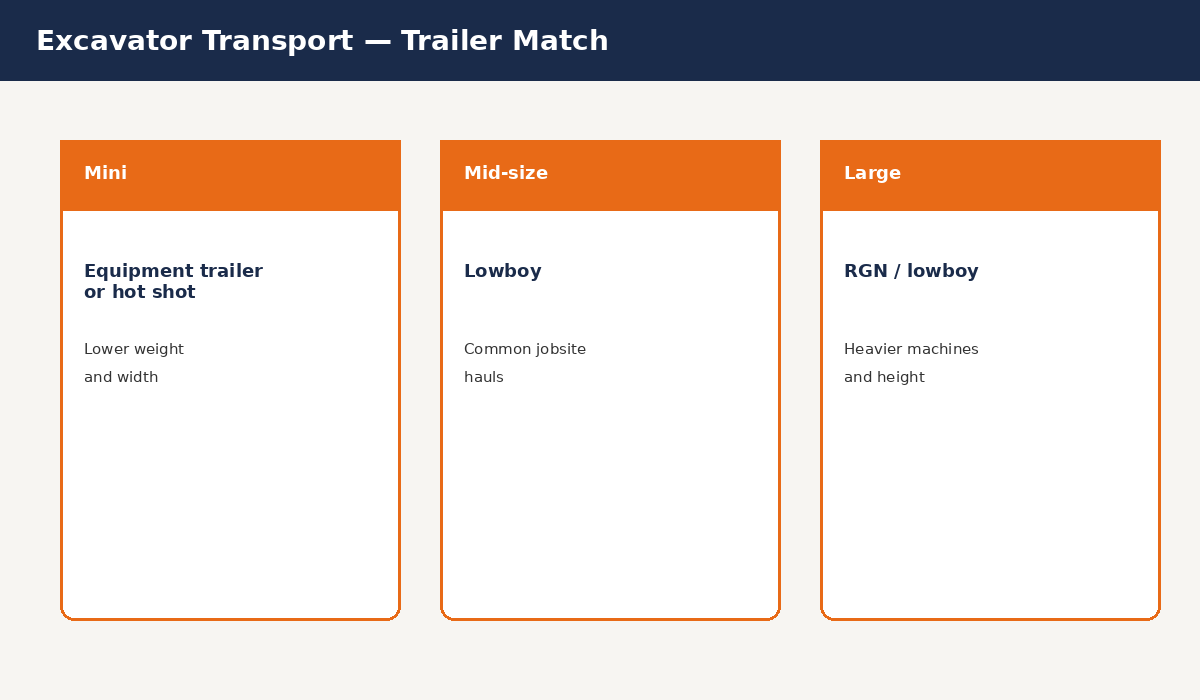
| Machine class | Typical trailer | Notes |
|---|---|---|
| Mini excavators | Equipment trailer or hot shot | Watch width and ramp angle |
| Mid-size excavators | Lowboy | Common for contractor fleets |
| Large excavators | Lowboy or RGN | Height and weight often need permits |
Mini excavators (equipment trailer, hot shot)
Many minis fit an equipment trailer or hot-shot setup when weight and width stay inside legal limits. Confirm axle ratings, tie-down points, and ramp length before you assume a pickup-and-go.
A hot shot can move a compact machine between nearby sites quickly, but soft ground at the pickup can still strand a light trailer. Have mats or a firm pad ready so the first attempt succeeds.
Mid-size and large excavators (lowboy, RGN)
Mid-size and large excavators usually need a lowboy or RGN for excavator loads so the deck sits low enough for height and the approach angle stays manageable. Share the make, model, serial number, weight ticket (if available), track width, and transport height with the boom in the travel position.
An excavator hauling trailer that can detach the gooseneck helps when the machine cannot climb a steep ramp. Tell us if the unit is non-running so winch plans are in place before the truck arrives.
Weight, Width and Height Limits
Legal travel depends on gross combination weight, axle spacing, overall width, and height with the boom and attachments in the travel configuration. Excavator weight on the ticket must match what the trailer and permits assume.
Over-width tracks and tall boom packages are the usual permit triggers. Measure with the machine configured for travel, not with the boom raised for digging. Attachments left on the stick can push height into a permit band you did not expect.
When permits and escorts are required
When loaded dimensions exceed state legal limits on the planned path, you need oversize or overweight permits, and some widths require escorts. Multistate routes need permits for each state. Build lead time into the schedule so excavator transport does not wait on a late permit.
For cost context on oversize hauls, see heavy equipment transport cost. Escort cars, travel-time windows, and holiday blackout dates can change the calendar even when the trailer is ready.
How to Secure an Excavator (49 CFR 393 basics)
Cargo securement for excavator transport must meet federal performance criteria. Under 49 CFR 393.102, tie-down systems must resist specified forward, rearward, and lateral forces so the machine does not shift in transit.
Use rated chains or binders at manufacturer-approved points. An excavator tie-down plan should keep the boom, house, and tracks from shifting, and it should never rely on a single under-spec strap.
Drivers recheck securement after the first miles. Your job is to present a clean machine with known lock positions so the first securement pass succeeds. Mark any damaged chain points before loading so the driver does not discover them under time pressure.
Prepare the Machine (boom, bucket, tracks, fluids)
Park the boom in the travel position, remove or secure the bucket per the haul plan, and lock the swing. Clean loose mud from the tracks so debris does not fly on the highway.
Check for hydraulic leaks and top off only as the manufacturer allows for transport. Tell the driver about articulation locks, swing locks, and any maintenance stands that must stay with the unit.
How to haul an excavator safely includes a photo set of each side, the serial plate, and the boom configuration before loading. That record protects both parties if a claim arises. Drain or secure loose tools in the cab so nothing becomes a projectile.
Self-Hauling vs Hiring a Carrier
Self-hauling can work for a light mini on a trailer you already own and know how to secure. It fails when the machine outgrows your trailer ratings, your CDL class, or your permit experience.
Hiring a carrier makes sense when weight, width, or route complexity exceed your equipment. If you are weighing options across machine types, our guide on how to move heavy equipment walks through the broader decision.
We do not claim an owned fleet. We match your excavator to vetted partner carriers with the right trailer and authority for the lane. Ask for USDOT and MC numbers before the truck rolls so you can confirm active authority.
What Excavator Transport Costs
Excavator shipping cost depends on distance, trailer type, permits, escorts, season, and whether the machine runs. Lowboy or RGN capacity prices differently from a hot-shot mini move. For the wider category, see heavy equipment transport.
Example from our coordination work: we moved a mid-size excavator on a lowboy between two Freight City jobsite partners on a regional lane, with the boom in the travel position, swing locked, and permits cleared before dispatch. No transit-time or price figures are published here because lanes change; request a current quote for your specs.
Share weight, dimensions, both sites, and dates to move an excavator with an accurate number. Avoid quotes that skip permits when your tracks are clearly over-width. Empty miles to reach a remote site also belong in the excavator transport conversation before you compare offers.
Request Excavator Transport
Ready to haul? Request an excavator quote with make, model, weight, width, transport height, and both addresses. We will match trailer and permits through our partner carrier network.
Frequently Asked Questions
What trailer do I need to haul an excavator?
Minis often fit on equipment or hot-shot trailers. Mid-size and large excavators usually need a lowboy or RGN. The right choice depends on weight, width, height, and ramp needs, not on the machine nickname alone.
How much does it cost to ship an excavator?
Cost depends on distance, trailer type, permits, escorts, and whether the machine runs. Request a quote with measured weight and dimensions rather than relying on a generic average.
Do I need a permit to move an excavator?
You may need oversize or overweight permits when loaded width, height, length, or weight exceeds state legal limits on the route. Many minis stay legal; many mid-size and large machines do not.
How do you tie down an excavator?
Use rated chains or binders at approved points so the machine resists the forces described in 49 CFR 393.102. Lock the boom and swing, and recheck after the first mile.
Can a mini excavator go on a hot shot trailer?
Often yes, when weight, width, and ramp angle fit the trailer ratings. Confirm axle capacity and securement points before you assume a hot shot is enough.
Load the Machine You Can Measure
Successful excavator transport is measurement, trailer fit, securement, and permits in that order. When you want that sequence handled with clear communication and vetted carriers, our team at Freight City Logistics will coordinate the haul for you.
Share gate width, surface conditions, and whether a spotter will meet the truck for excavator transport. Those site notes prevent a legal trailer from failing at the last hundred feet because the pad is soft or the turn is too tight.