
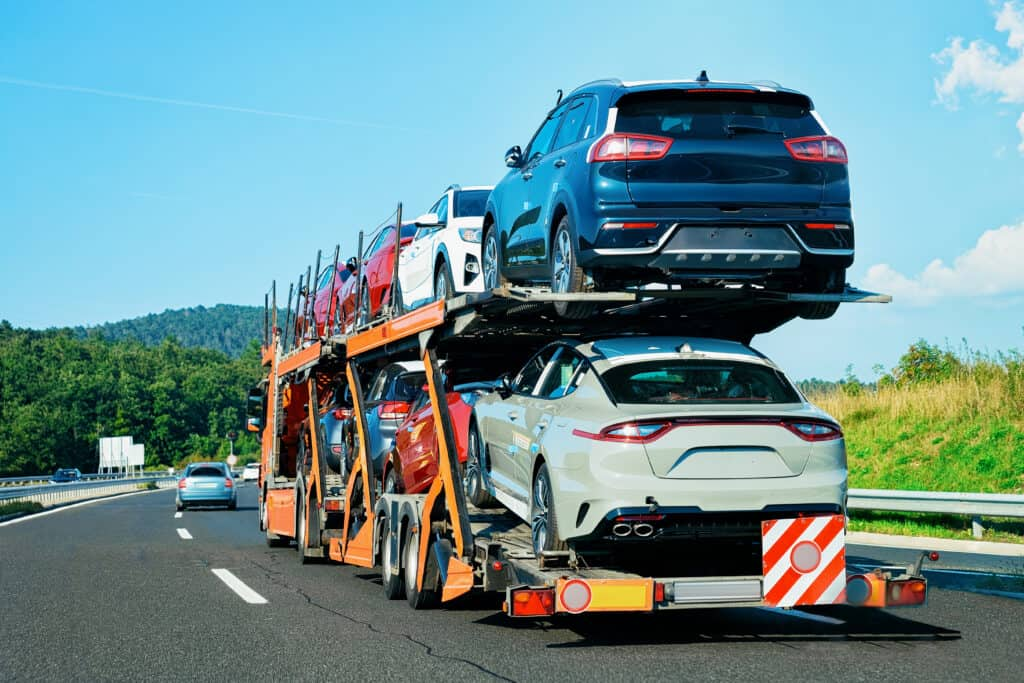
Door-to-door car shipping means a carrier picks up your vehicle at, or as near as safely possible to, your address and delivers it the same way at your destination. It is convenient when streets and truck access allow, but you still need a clear plan for access limits, meeting points, and paperwork.
Key takeaways:
- Door-to-door service means the closest safe, legal spot, not a guarantee that a long carrier enters every driveway.
- Access limits, vehicle size, distance, and open versus enclosed capacity drive most of the price.
- Terminal service can cost less when you can drive to a yard; residential pickup adds convenience and sometimes miles.
- Be present for inspection at pickup and delivery, or authorize someone 18 or older.
- We are licensed and bonded, and we coordinate every move through a partner carrier network (DOT 3752961, MC 1332997).
What Is Door-to-Door Car Shipping?
Door-to-door car shipping is auto transport that starts and ends as close to your chosen addresses as the truck can safely reach. Private owners often choose it when they book motor vehicle transportation and want convenience over a depot meetup.
“As close as safely possible” still depends on street width, overhead clearance, HOA rules, and the length of the trailer. Knowing those limits up front tells you how far you may need to drive the car to meet the truck.
Door-to-door auto transport and door-to-door vehicle shipping describe the same idea: pickup and delivery at or near your home when access allows. The order paperwork should still name the actual meeting point if the street cannot fit the truck.
How Door-to-Door Car Shipping Works (step by step)
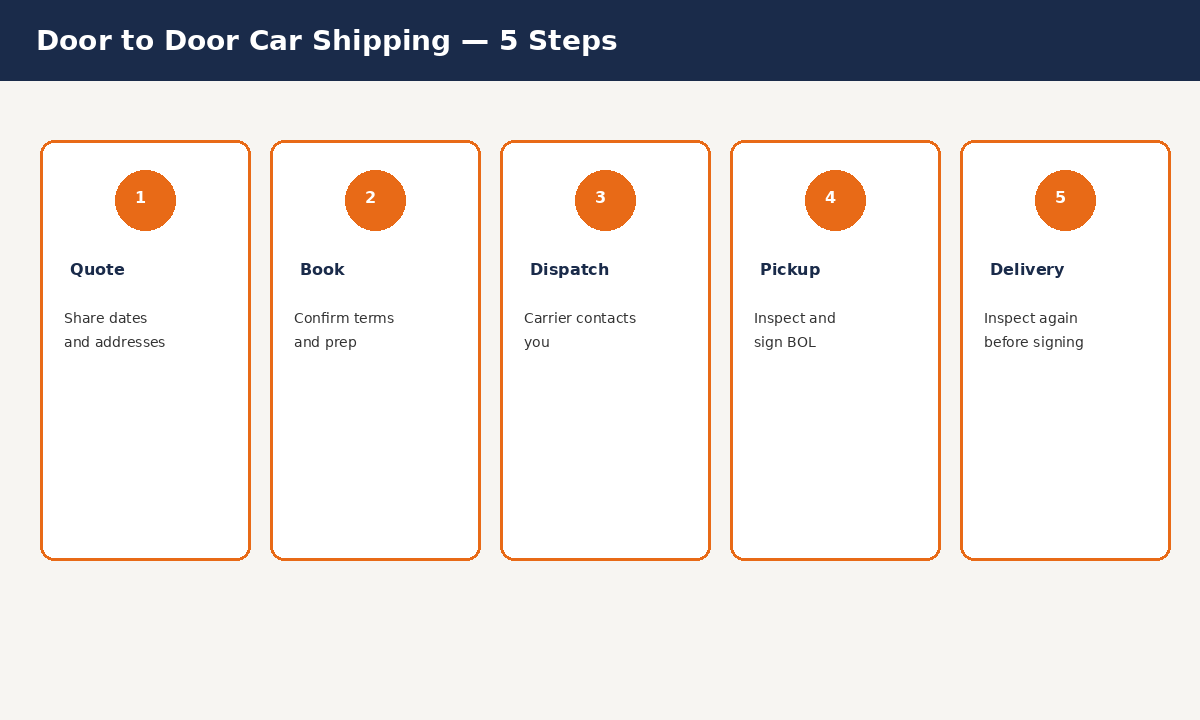
The process for door-to-door car shipping follows a predictable sequence from first quote to signed delivery. Here is how we walk you through it.
- Share your origin, destination, dates, vehicle details, and running condition for a quote.
- Book the order, confirm the terms, and prepare the car for pickup.
- A partner carrier is dispatched to your route and contacts you with an updated pickup window.
- At pickup, you and the driver inspect the car, note its condition, and sign the bill of lading; the driver then follows hours-of-service limits on the planned route.
- At delivery, inspect the car again before you sign, and keep your paperwork.
Under 49 CFR Part 370, if something goes wrong in transit, the carrier must acknowledge your written claim within 30 days and pay, decline, or make a settlement offer within 120 days, with written status updates if the claim takes longer.
Door-to-Door vs. Terminal-to-Terminal
Terminal-to-terminal car shipping asks you to drop off and pick up the car at carrier yards. Door-to-door service brings the trailer closer to your addresses when access allows.
| Factor | Door-to-door | Terminal to terminal |
|---|---|---|
| Pickup/delivery | Closest safe spot to your address | You drive to a carrier yard |
| Convenience | Higher when streets fit the truck | Lower; you handle both ends |
| Typical price | Often higher for access and empty miles | Often lower when yards are nearby |
| Good fit when | You want residential car pickup and limited driving | You can reach yards and want to trim the haul cost |
Requests for “car delivery to my home” are still subject to the same truck-size limits as any residential stop. If the trailer cannot turn on your street, the meeting point becomes the practical door.
When the Truck Cannot Reach Your Street
A long car carrier cannot enter narrow cul-de-sacs, gated alleys, or HOA streets with truck bans, or pass under low tree canopies. That does not cancel door-to-door car shipping; it changes the meeting point.
Large carriers and residential restrictions
Multicar trailers need room to approach, load, and leave. Share gate codes, HOA truck rules, low wires, and tight turns when you book. A two-minute note can prevent a failed first attempt and a redispatch fee.
Residential car pickup still works in many neighborhoods when you plan the approach. If the street is marked for passenger cars only, expect a nearby arterial or lot as the meeting spot. Tell dispatch about school zones and rush-hour choke points so the driver does not arrive when traffic or parked cars block the street.
Choosing a nearby meeting point
A good meeting point is a large retail lot, park-and-ride, or wide side street where the truck can stop legally without blocking traffic. You drive the car a short distance, complete the inspection, and then the haul continues. Share a dropped pin, a cross street, and a backup lot so the driver is not hunting for curb space.
Ask the lot owner or manager before you choose a private parking lot, and pick a time when the lot is quiet. Early mornings and weekday evenings usually leave more room for a long trailer to turn. Record the car shipping meeting point on the order so dispatch and the driver work from the same address.
What Affects the Price
Distance, open versus enclosed capacity, season, fuel, and how hard the addresses are to reach all change door-to-door car shipping pricing. Rural origins, routes that need a ferry, and dense downtown cores can add empty miles or wait time.
The choice between open vs. enclosed car transport also changes the number because enclosed capacity is tighter.
Vehicle size matters too. A full-size pickup, a lifted SUV, or a car with a roof rack takes more deck space or height than a compact sedan, which can raise the quote. Mention modifications, oversized tires, and low ground clearance up front so the quote matches the car.
Clear photos and accurate running-condition notes keep quotes reliable. We do not publish a single nationwide price because lanes and capacity shift. Ask for the same scope on every offer so you can compare like for like.
How Long It Takes
Transit time tracks distance, weather, hours-of-service limits, and how quickly a truck with open space hits your lane. Pickup windows are often wider for rural addresses than for busy interstate corridors because carriers fill routes where they already run.
Flexible dates give the dispatcher more trucks to choose from. If you have a hard deadline, tell us when you book so we can plan around it.
For a deeper look at timelines by distance, read our guide: How Long Does Car Shipping Take? Door-to-door service does not remove hours-of-service limits; it only changes where the truck meets you.
Dealer-lot congestion, weather holds, and mechanical issues on the carrier can stretch a window. Build a buffer into your own plans rather than booking same-day air travel against the delivery ETA.
Tips for a Smooth Pickup and Delivery
Walk around the car with the driver and note existing damage on the bill of lading. Photograph every panel, the odometer, and the interior before loading. Remove personal items, toll tags, and loose cargo. Leave about a quarter tank of fuel.
For a full prep list, see our guide on how to prepare your car for shipping. Keep the order number handy so any dispatcher can find your shipment if the driver calls from an unfamiliar number.
Car carrier access matters just as much: measure the approach if you can, and have a meeting-point plan ready before the truck is an hour out. Smooth service depends on that access plan as much as on the miles between cities.
Request Door-to-Door Car Shipping
If you are ready to book, request a car shipping quote with both addresses, dates, and vehicle details. We will match partner carrier capacity to your route and access notes for door-to-door car shipping.
Frequently Asked Questions
Is door-to-door car shipping more expensive?
Door-to-door service often costs more than terminal-to-terminal service because the truck spends more time off main corridors and may need a smaller trailer or a meeting-point plan. The exact difference depends on your addresses and dates.
Does the truck come to my exact address?
The truck comes to your exact address only if it can legally and safely reach it. Otherwise, the driver meets you at the nearest safe spot you agree on.
Do I need to be present at pickup?
Someone 18 or older whom you authorize should be present to complete the inspection and sign the bill of lading. The same rule applies at delivery.
Can I leave personal items in the car?
Most carriers limit or ban personal items because they are usually not covered by the carrier’s cargo insurance. Remove belongings before pickup unless your order expressly allows a small, declared exception.
Is door-to-door shipping safe?
Door-to-door shipping is safe when you book a vetted carrier, complete both inspections, and keep your paperwork. Safety still depends on securement, weather, and driver practices on the route.
Treat Your Door as the Closest Safe Spot
Door-to-door car shipping goes smoothly when you treat the door as the closest safe, legal spot and plan access before the truck rolls.
When you want that handled with clear communication and vetted carriers, our team at Freight City Logistics will coordinate it for you.