
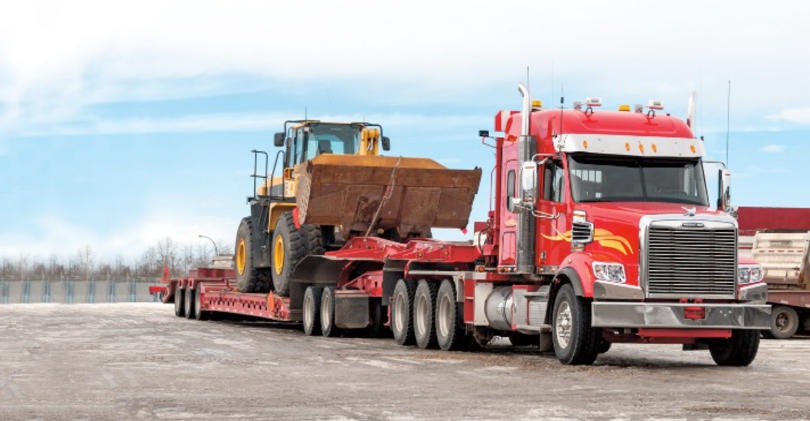
Heavy equipment hauling companies differ in authority, insurance, trailer fleets, and permit skill, so a low quote alone is a weak filter. This guide shows how to vet carriers and brokers, spot red flags, and choose a partner that can move your machine legally.
Key takeaways:
- Verify USDOT and MC numbers, insurance, and safety history before you book.
- Confirm the trailer type (RGN, lowboy, step deck) matches your machine.
- Ask how permits and route surveys are handled on oversize lanes.
- Watch for deposit pressure, vague authority, and insurance that cannot be verified.
- We are licensed and bonded, and we coordinate through a vetted partner carrier network (DOT 3752961, MC 1332997).
Types of Heavy Equipment Hauling Companies
Some heavy equipment haulers are asset-based carriers that own trucks and trailers. Others are brokers that arrange capacity. Some shops do both.
An equipment hauling company that runs its own RGN fleet can control equipment fit closely. An equipment transport broker vs. carrier choice matters when you need nationwide reach beyond one fleet’s lanes.
Specialization matters. A carrier that thrives on excavators may not be the right fit for a long industrial vessel move. Request references on similar weight and width before you treat a general freight authority as proof of heavy-haul skill.
For oversized project lanes, see the best company for transporting oversized loads. Comparing hauling companies on paperwork quality is as useful as comparing them on price alone. Heavy equipment transport remains the broader service category those specialists serve.
Document every promise about escorts, layover fees, and layover responsibility in the rate confirmation so the roadside story matches the paperwork. Yard contacts, gate codes, and mat requirements should sit beside the weight ticket so the first attempt succeeds.
After-hours phone trees matter when a permit window opens before sunrise, and someone has to release a gate. Write those contacts into the order before the truck is assigned.
Vetting Checklist
Use this six-point checklist when you compare heavy equipment hauling companies. A short phone screen still helps: ask them to walk through trailer choice before they quote a number.
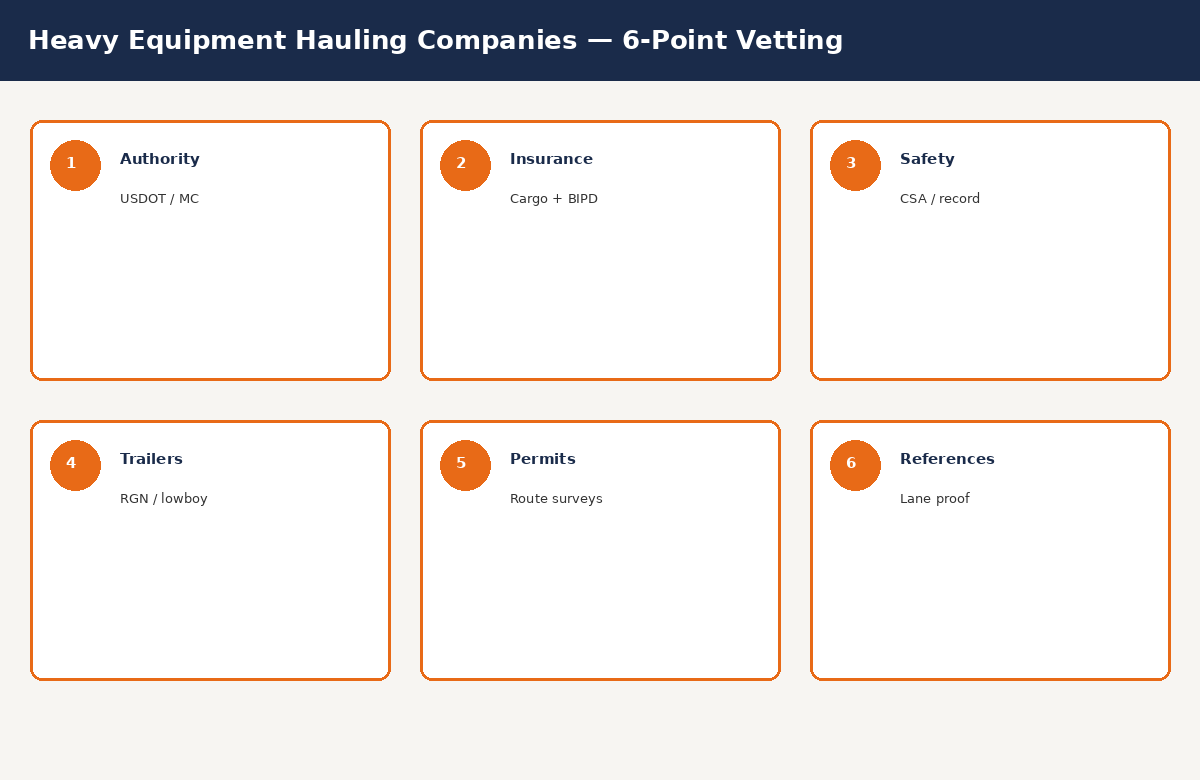
Operating authority, USDOT and MC numbers
Ask for the legal name, USDOT number, and MC number. Check carrier FMCSA authority on the public SAFER Company Snapshot before money changes hands. Active authority is the floor, not the ceiling, for heavy haul carriers.
You can look up a company on the FMCSA SAFER Company Snapshot by USDOT or MC number to review legal name, authority status, and insurance filings. Keep a screenshot of the result with your bid file.
Insurance and cargo coverage
Confirm auto liability and cargo limits in writing, and ask whether your machine’s value sits inside the cargo policy. Certificates should name the carrier that will haul, not a shell entity.
Public liability and cargo are different layers. Do not confuse a BIPD certificate with a promise that damage to your excavator will pay at full replacement cost. Ask for the cargo deductible and any exclusions that touch tracked equipment.
Safety record
Review publicly available safety data and ask about recent crashes or out-of-service patterns on the equipment you care about. A clean phone manner does not replace a readable safety record.
How to choose an equipment hauler includes asking who controls the driver when a broker is in the middle. You still want the actual hauler’s record, not only the broker’s marketing page.
Trailer fleet (RGN, lowboy, step deck)
An RGN carrier or lowboy hauler should describe deck height, ramp plan, and axle ratings for your exact machine. Step decks fit some loads; they are not a universal substitute for a lowboy.
Ask what happens if the first trailer assigned is too short or too high. Strong heavy equipment hauling companies have a backup plan before your machine is stranded at a gate. Soft ground, overhead wires, and tight turns belong in that same trailer conversation.
Permit and route-survey capability
Oversize moves need permits, and some need route surveys for bridges, turns, and wires. Ask who pulls permits, how long lead times run, and whether escorts are likely on your width.
Keep permit conversations tied to your dimensions, not a slogan. Holiday blackout dates and daylight-only travel windows can stretch the calendar even when the trailer is ready.
References and lane experience
Ask for recent references on similar weight, width, and region. Lane experience reduces surprise delays when a carrier already knows the corridor’s permit quirks.
Ask how they estimate heavy equipment transport cost for oversize permits and escorts before you compare bids.
A broker who cannot name the type of trailer they will book is not ready to quote. Push for equipment detail before you compare price among hauling companies. Keep a shared folder with photos, weight tickets, and permit PDFs so every dispatcher works from the same file.
Site access notes belong in every remote-pickup file. A second look at insurance filings separates serious operators from brokers who only forward emails.
Red Flags and Scam Warning Signs
Pressure for large deposits to personal accounts, refusal to share USDOT or MC numbers, and certificates that do not match the hauling entity are classic warnings when you screen heavy equipment hauling companies.
Fake insurance certificates and bait-and-switch trailer assignments show up when shippers skip verification. If the story changes after you pay, stop and recheck authority before the truck is loaded.
For related broker selection habits, see how to choose the right freight broker. If a caller will not put the carrier’s legal name on the rate confirmation, treat that as a hard stop. Verbal promises about “a buddy with a lowboy” are not a substitute for authority you can look up.
Ask whether the driver will call before arrival and how long the team will wait if site access is late. Demurrage rules should be written, not assumed, especially when a crane or spotter has to meet the truck.
Questions to Ask Before You Book
- What trailer will haul this exact machine, and why?
- Who holds the operating authority on the truck that shows up?
- What are the cargo and liability limits on that carrier?
- Who pulls permits, and what is the lead time?
- How do claims and after-hours contacts work?
- Can you share a recent reference on a similar load?
Write the answers in order. For terminology on specialized moves, a guide on what heavy haul trucking is is a useful companion read.
If two offers give similar prices but only one can explain the permit path, choose the clear explanation. Ambiguity on oversize lanes usually becomes delay or a re-quote later.
Keep emergency contacts for the shipper, the receiver, and the permit office in one place. When a bridge restriction changes mid-route, that list is what keeps the load moving instead of sitting on the shoulder.
How Freight City Vets Its Carrier Network
We check authority, insurance filings, and equipment fit before we tender heavy equipment transport work. Our model is a licensed and bonded brokerage with a partner carrier network, not an owned fleet claim.
That vetting is how we keep heavy equipment hauling companies on our lanes aligned with the machine you need moved.
When a load needs an unusual trailer or a tight permit window, we say so before booking instead of hoping the first assigned truck will stretch to fit.
Get a Heavy Equipment Hauling Quote
Ready to compare heavy equipment hauling companies with clear specs? Visit us to request a heavy equipment quote with weight, dimensions, both sites, and dates. We will match vetted capacity to the load.
Frequently Asked Questions
How do I find a reputable heavy equipment hauler?
Start with USDOT and MC verification, insurance certificates, trailer fit for your machine, and references on similar loads. Price comes after those checks, not before. Reputable heavy equipment hauling companies answer those questions without delay.
What insurance should a heavy haul carrier have?
Confirm auto liability and cargo coverage in writing, and verify that the certificate matches the carrier that will haul. Ask whether your machine’s value sits inside the cargo limit.
Is a broker or a carrier better for equipment hauling?
Carriers control the truck directly; brokers expand reach across many fleets. Either can work when authority, insurance, and trailer fit are verified for the actual hauler.
How do I verify a carrier’s authority?
Use the FMCSA SAFER Company Snapshot with the USDOT or MC number. Confirm active authority and review insurance filings before you book.
What are common heavy hauling red flags?
Deposit pressure to personal accounts, missing USDOT or MC numbers, unverifiable insurance, and trailer bait-and-switch after booking are common warnings.
Choose the Hauler You Can Verify
The right choice among heavy equipment hauling companies is the one you can verify on authority, insurance, trailer fit, and permits. When you want that vetting handled for your next move, our team at Freight City Logistics will coordinate it for you.
Confirm who pays for night or weekend gate openings when a permit window forces odd-hour travel. Surprise accessorials are easier to avoid when the rate confirmation names them. Photograph serial plates, hour meters, and any existing damage before the truck arrives. Those images speed claims review if something changes between origin and destination.