
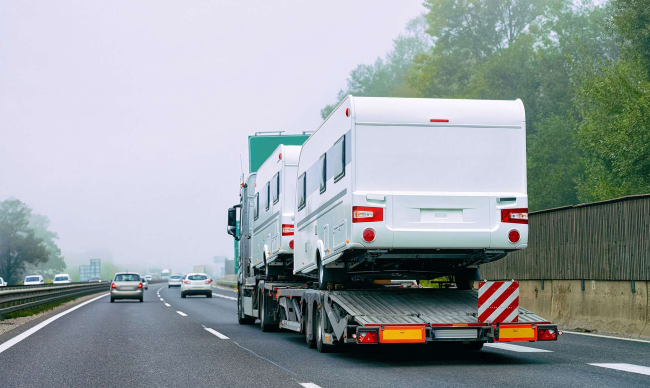
The best RV transport companies combine verified authority, insurance that matches your unit, and equipment sized for your length and class. You want a clear quote, a realistic transit window, and a dispatcher who answers before the truck is already on the road.
Key takeaways:
- Vet USDOT and MC numbers, cargo coverage, and equipment fit before you pay a deposit.
- Driveaway, tow-away, and flatbed methods each fit different RV types and risk levels.
- Class A, Class C, travel trailers, and fifth wheels change clearance, weight, and permit needs.
- Price tracks distance, season, length, and whether the unit rolls under its own power.
- We are licensed and bonded (DOT 3752961, MC 1332997) and coordinate RV moves through our partner carrier network.
How RVs Are Transported (driveaway, tow-away, flatbed)
RV shipping companies typically move units three ways. Driveaway RV transport puts a contracted driver in the coach so it travels on its own wheels under its own power. Tow-away uses a truck to pull a travel trailer or fifth wheel on its axles.
Flatbed or lowboy methods load the RV onto a trailer when height, mechanical issues, or route limits make towing or driving a poor fit.
Driveaway suits many motorhomes when the unit is street-legal, insured for the trip, and mechanically sound. Tow-away fits travel trailer transport and fifth wheel transport when the tongue, pin box, and brakes are ready. Flatbed helps when you need camper transport for a damaged unit, an oversize profile, or a route that cannot tolerate a long tow.
Ask which method the quote assumes. The best RV transport companies explain the method in writing so you are not surprised by a last-minute equipment swap.
Mixed methods appear on some long moves when a coach is driven partway and then loaded for a restricted corridor. Get that plan in writing, including who carries insurance during each leg. Clarity here is a practical filter when you compare the RV transport companies side by side.
What the Best RV Transport Companies Have in Common
Strong RV hauling services look similar once you strip away the marketing. You see verifiable authority, cargo coverage that fits the unit value, equipment matched to length, transparent pricing, and communication that does not disappear after the deposit clears.
How we evaluated: The criteria in this guide reflect what our coordinators check before assigning a partner carrier to an RV load: active USDOT and MC authority, cargo coverage, equipment fit, written pricing, and response time. We do not rank or endorse named companies.
Verified authority and insurance
Start with the USDOT and MC numbers for the company that will haul the RV, not only the broker that sold the job. Under 49 CFR Part 390, a carrier running a driveaway move must display its legal name or single trade name and its USDOT number on both sides or the rear of the driven vehicle, often on a removable device, so you can match the coach to the carrier you vetted. Matching those markings to your paperwork is a practical way to verify RV transport companies at pickup.
Confirm active authority and ask for proof of liability and cargo insurance. Cargo limits, deductibles, and exclusions for personal contents vary. The best RV transport companies share certificate details without pressure tactics.
Broker arrangements are common in this niche. That is fine when the broker names the hauling carrier before pickup and keeps both authorities visible. Opaque handoffs are a common reason shippers walk away from otherwise polished sales calls.
Equipment matched to RV type and length.
A 45-foot Class A needs different gear than a compact travel trailer. Confirm deck length, hitch class, brake controller, and whether escorts or permits apply for your height and width. Toy hauler transport often needs extra attention to garage-door seals, ramp hardware, and interior tie-downs if the garage rides empty.
Share exact length, width, height, and dry weight or GVWR figures from the manufacturer plate. Guesswork creates missed pickups and mid-route delays.
Measure to the highest point with air conditioners, antennas, and racks included. A two-inch miss can turn a legal move into a permit load. The best transport companies ask for those measurements early instead of discovering them at the curb.
Clear pricing and transit windows
A usable quote lists origin, destination, method, inclusions, and a pickup window plus estimated transit days. Watch for vague “as soon as possible” language, large deposits to personal accounts, or prices that undercut the market by a wide margin.
The best RV transport companies separate the booking fee from carrier pay when a broker is involved and tell you when the assigned truck’s details will be shared.
Ask what happens if the first assigned truck falls through. Reliable shops re-cover the load and keep you updated rather than going silent. That recovery process quietly separates strong haulers from weak ones.
Reviews and communication
Recent shipper reviews matter more than decade-old testimonials. Look for comments about damage handling, schedule updates, and how problems were resolved. Call or email before you book and note how quickly you get a clear answer about your specific unit.
If you already compared specialized haulers for boats or homes, the same communication standard applies when you compare the best boat transport companies and other oversized-move specialists.
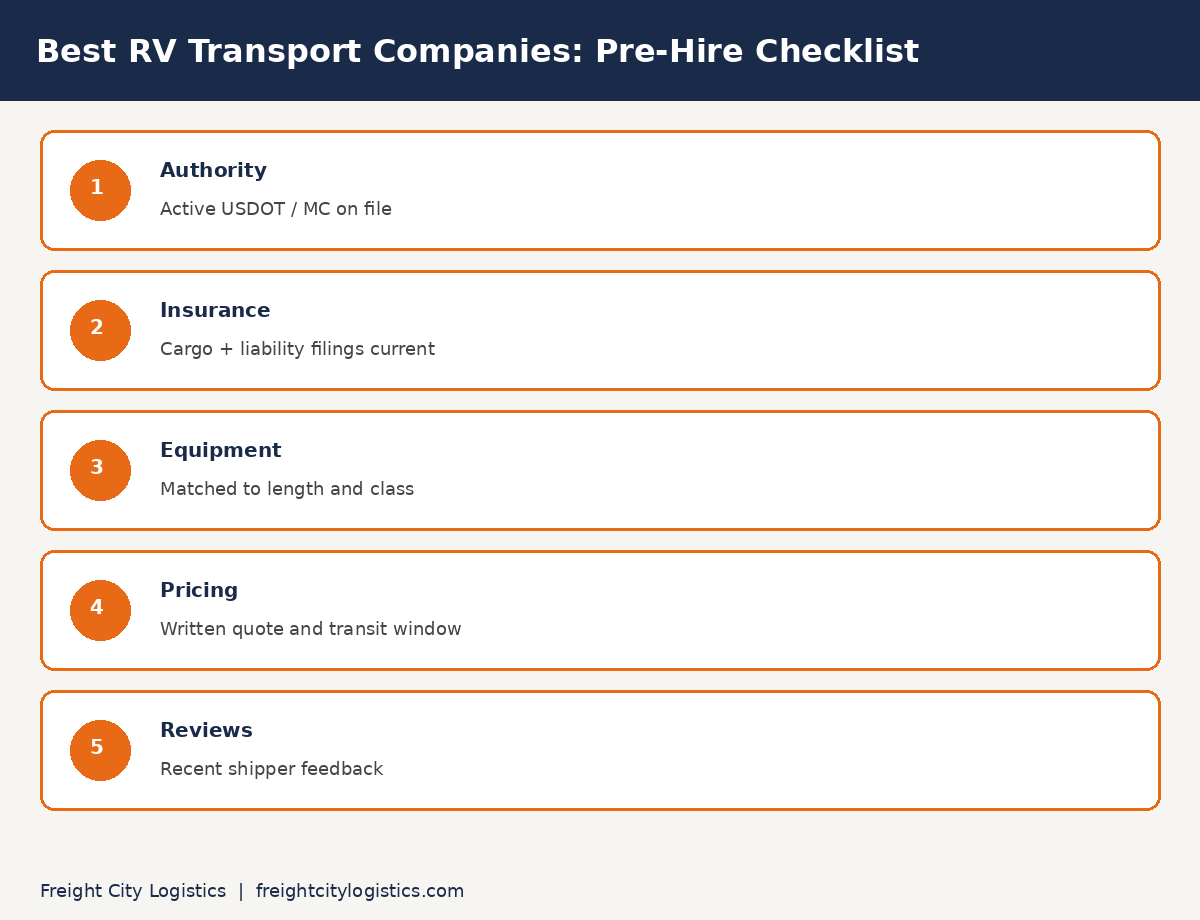
Before you hire any of the transport companies, check these five items:
- Active USDOT and MC authority for the hauling carrier
- Liability and cargo insurance certificates
- Equipment matched to your RV’s length, height, and class
- A written quote with method, inclusions, and pickup window
- Recent reviews and a named day-of contact
Class A, Class C, Travel Trailer and Fifth Wheel: What Changes
Class A RV shipping usually involves the longest coaches, higher roofs, and tighter route planning around bridges and fuel stops. Class C units are often shorter but still need accurate height and generator-clearance notes. Travel trailers and fifth wheels shift the conversation to tow vehicle ratings, brake controllers, and pin-box or coupler condition.
Motorhome transport for diesel pushers may also involve diesel exhaust fluid (DEF) levels, air-brake checks, and engine hours. Fifth wheel transport needs a compatible truck and correct kingpin height. Tell the dispatcher about slides, satellites, solar racks, and aftermarket spoilers that change the envelope.
When your move also involves autos on the same trip, our motor vehicle transportation team can coordinate the car separately so the RV plan stays focused on length and method.
Questions to Ask Any RV Transporter
Ask who holds the operating authority on dispatch day, what cargo limit applies to your unit, and whether personal items inside are covered. Confirm the transport method, estimated pickup window, and how weather or breakdowns are handled.
Request the process for inspection photos, the bill of lading, and claims. Ask whether redelivery fees apply if the destination park will not allow the truck inside. The best RV transport companies answer these points before money changes hands.
Also ask who your day-of contact is, how GPS or check-call updates work, and whether weekend arrivals are possible at the destination. Operational details reveal more than a slogan on a homepage when you shortlist the transport companies.
If you are comparing residential specialists as well, reading how shippers evaluate the best mobile home movers can sharpen the same authority and insurance questions.
What RV Transport Costs and What Drives It
RV transport cost depends on distance, unit length, season, route difficulty, and method. Peak snowbird lanes fill earlier and price higher. Longer Class A coaches cost more than compact trailers on the same corridor because equipment options shrink.
Expedited windows, inoperable units, low bridges that force detours, and destination parks with tight turns all add cost. We do not quote a single national average because lane balance and fuel prices change weekly. Share origin, destination, dates, and specs for a quote that reflects current partner-carrier capacity.
Deposit policies deserve a close read. Modest booking deposits with clear refund terms are normal. Large prepaid balances to unfamiliar personal accounts are not. Pricing discipline is part of how the best RV transport companies earn repeat snowbird and dealer work.
How to Prepare Your RV for Transport
Retract slides, secure awnings, tape or latch exterior doors, and remove or reinforce loose exterior items. Photograph every side, the roof if accessible, and the odometer or hour meter. Empty perishable food, shut off propane as directed, and leave fuel at a safe travel level for driveaway moves.
Defrost refrigerators, disconnect sewer and water lines, and pack loose interior items so they cannot shift into cabinets or windshields. For related vehicle-prep habits that also help RVs, see how to prepare your car for shipping.
Walk the unit with the driver, note existing damage on the bill of lading, and keep keys, remotes, and gate codes ready. Preparation is one reason the best RV transport companies can keep schedules realistic.
If the park or HOA limits truck size, arrange a nearby meeting point in advance. A planned short drive to a wide lot beats a refused entry at the gate. Coordinators at the transport companies prefer that conversation before dispatch day.
Get an RV Transport Quote
Ready to move a motorhome, travel trailer, fifth wheel, or toy hauler? Tell us the year, make, model, length, running condition, and preferred dates. Request an RV quote, and we will match your unit with vetted capacity through our partner carrier network.
Whether you are comparing dealer inventory moves or a one-time snowbird relocation, we treat equipment fit and insurance documentation as non-negotiable. That is the same standard we use when shippers ask us to help them evaluate the best RV transport companies for their lane.
Frequently Asked Questions
How much does it cost to transport an RV?
Cost depends on distance, length, season, route, and whether you use driveaway, tow-away, or flatbed service. Longer Class A coaches on peak lanes cost more than compact trailers on short regional moves. Share origin, destination, and specs for a current quote instead of relying on a generic average.
What is the difference between driveaway and flatbed RV transport?
Driveaway uses a contracted driver to operate the motorhome on its own wheels. Flatbed loads the RV onto a trailer, which helps when the unit cannot be driven or towed safely or when route limits favor a loaded move. Your quote should state which method is planned.
Can I leave belongings inside the RV?
Many carriers limit or exclude household contents. Lightweight, secured items may be allowed at your own risk, while high-value or loose belongings should travel separately. Confirm the cargo policy in writing before you pack the coach, and photograph anything you leave inside.
How long does RV shipping take?
Transit time follows distance, weather, hours-of-service limits, and how quickly a matching truck is assigned. Regional moves may finish in a few days after pickup, while cross-country lanes take longer. Ask for a quote that lists the pickup window separately from driving days.
Is RV transport insured?
Professional haulers carry liability insurance, and many carry cargo coverage with stated limits and exclusions. Coverage for personal contents is often limited. Ask for certificate details and compare them with your own RV policy before pickup. If any term is unclear, get it in writing.
Choose an RV Hauler You Can Verify Before Pickup
When comparing the best RV transport companies, look for a provider with the right shipping method, documented authority, and insurance suited to the RV you need to move.
When you want that process handled with clear communication and vetted carriers, our team at Freight City Logistics will coordinate the move with you.