
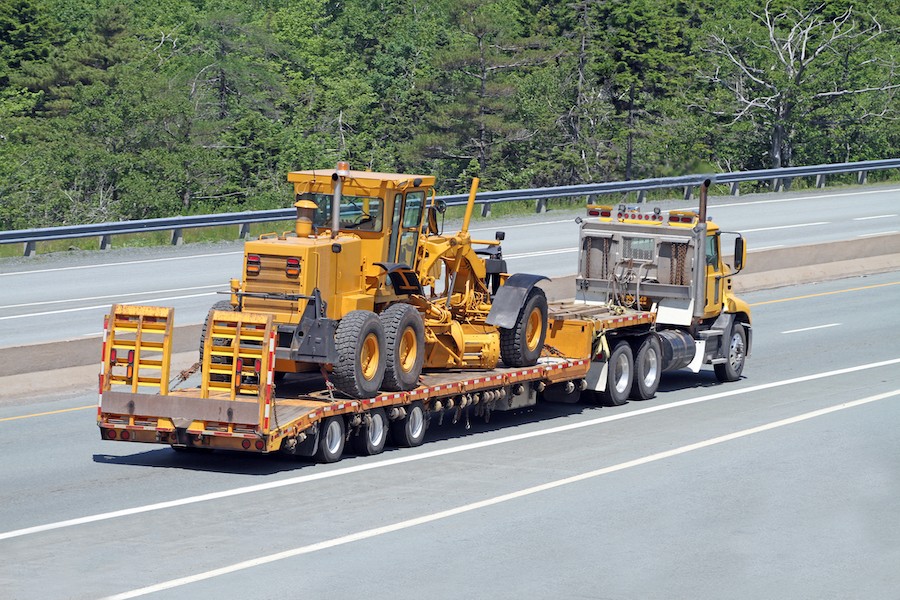
Construction equipment shipping moves loaders, excavators, skid steers, backhoes, and related machines between yards, rental houses, and active job sites. The right trailer, permit plan, and load sequence keep mobilization on schedule without damaging undercarriages or delaying crews. We coordinate each move through our partner carrier network, from the first spec sheet to the final unload.
Key takeaways:
- Match machine weight and dimensions to trailer type before you book.
- Multi-machine moves save money when you consolidate loads and sequence the unload order.
- Oversize width, height, or weight triggers state permits and sometimes escorts.
- Cargo securement must meet federal tiedown performance rules.
- We are licensed and bonded (DOT 3752961, MC 1332997) and coordinate heavy moves through our partner carrier network.
Types of Construction Equipment and How Each Ships
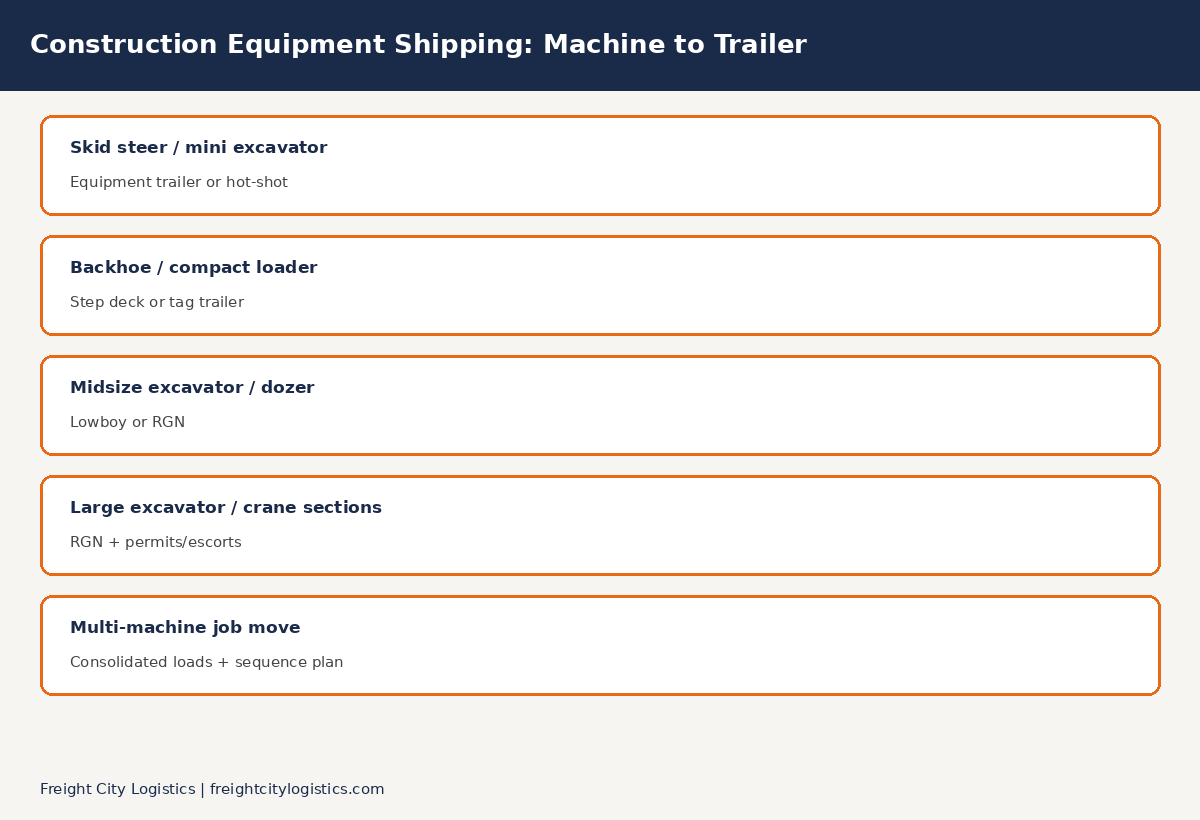
Compact machines such as a compact track loader or mini excavator often ride on an equipment trailer or hot-shot setup. Midsize wheel machines and backhoe transport jobs usually need a step deck or tag trailer with enough deck length and ramp angle. Larger dozers and excavators typically require a lowboy or removable gooseneck (RGN).
Construction machinery transport also covers attachments. Buckets, blades, and thumbs may ship installed or separately, depending on height and securement. Tell the dispatcher what stays on the machine so the quoted trailer still clears bridges and wires.
When the scope includes earthmoving plus materials, pair machine moves with construction material transportation so material trucks and machine deliveries do not compete for site access on the same day.
Trailer and Transport Methods
Trailer choice is the core of construction equipment shipping. Hot-shot and tag trailers suit lighter units. Step decks help when height is tight, but weight is moderate. Lowboys and RGNs put heavy machines closer to the ground for stability and bridge clearance.
| Equipment type | Common trailer | Watch-outs |
|---|---|---|
| Compact track unit | Equipment trailer / hot-shot | Secure tracks or tires; watch ramp angle |
| Backhoe | Step deck/tag | Stabilizers and arms stowed |
| Midsize excavator | Lowboy / RGN | Boom height; counterweight plan |
| Dozer | Lowboy / RGN | Blade width; track mud cleanup |
| Crane components | RGN + specialized | Section weight; boom permits |
For deeper machine-specific guidance, see excavator transport. That page expands on configurations that often appear inside broader shipping projects.
Planning a Multi-Machine Mobilization
Equipment mobilization for a full spread is more than booking five separate trucks. You need an unload order, site-access paths, and a plan for which machines work first. Construction equipment shipping succeeds when the excavator is not buried behind the compactor on the same trailer.
Sequencing and job-site access
Map gate width, overhead lines, soft ground, and turnarounds before the first truck arrives. Sequence deliveries so early machines clear paths for later lowboys. Night or weekend gates may be required around urban cores.
Move construction equipment between job sites with the same discipline: stage mats, assign spotters, and name a single site contact who can redirect trucks if the pad is not ready.
Consolidating loads to cut cost
When weights and dimensions allow, consolidating two compact units on one permitted truck can cut cost versus two partial loads. Never force a consolidation that exceeds legal limits or safe securement. Ask the carrier to confirm deck-plan drawings for mixed loads.
Our heavy equipment transport team uses the same consolidation logic across construction and industrial fleets.
Permits, Weight and Dimension Rules
Legal width, height, length, and gross weight thresholds vary by state. Once a load exceeds those limits, oversize or overweight permits and sometimes pilot cars apply. Construction equipment shipping quotes should state who pulls permits and how many days the filing takes.
Securement is regulated even when the load is legal size. 49 CFR Part 393 sets federal cargo securement rules for commercial motor vehicles, including working load limits and tiedown requirements that apply when shipping construction equipment.
Clean mud from tracks, lower booms as specified, and lock articulating joints. A cleaner, lower profile reduces both permit complexity and highway risk.
Pricing Factors
Price tracks trailer type, distance, permits, escorts, season, urgency, and loading support. Crane sections and tall excavators cost more than a compact unit on a tag trailer for the same miles. Idle time at the site also appears as detention when crews are not ready. Our guide on how to transport a crane covers those section-by-section moves.
Equipment rental return transport often prices differently from a one-way sale move because pickup windows and yard hours are fixed. Share whether the machine is rented, sold, or company-owned so the dispatcher plans access correctly.
Cross-Border Moves (U.S., Canada, Mexico)
Cross-border equipment shipping adds customs paperwork, bond questions, and carrier authority that is valid in each country. Lead times grow because appointments and inspections stack on top of permit filing.
Tell us early if a machine will leave the United States. Construction equipment shipping across borders often stalls on incomplete serial-number documentation, not on highway miles alone. Our heavy machinery transport team can review export paperwork alongside the trailer plan.
Checklist Before You Book
- Exact make, model, year, weight, width, height, and length
- Attachments on or off and boom or blade position
- Running condition and whether it self-loads
- Origin and destination access notes and hours
- Target dates and whether escorts or night moves are acceptable
For a general planning walkthrough that pairs with this checklist, see how to move heavy equipment. Completing the list up front keeps the booking on the first quoted truck.
Rental yards and contractors often book trucks for the same early-week windows. If your date is fixed, tell us whether a weekend gate or extended site hours are possible, and dispatch will check them against permit travel-hour limits.
Photograph serial plates, hour meters, and existing body damage before the truck arrives. Those images support claims and help the receiving site confirm it received the right asset.
Fuel levels, diesel exhaust fluid (DEF), and leaking fluids should be managed before loading. Carriers may refuse a machine that is actively dripping oil onto the deck or highway.
If the destination pad is unfinished, schedule mats and a spotter rather than hoping the lowboy can cross soft fill. Stuck trucks lead to costly recovery calls and missed pour schedules.
For fleet managers, building a repeatable spec-sheet template with weight, dimensions, attachments, and access notes shortens every future tender. The second and third moves go faster when the first one has taught the team what carriers ask.
We also recommend naming a single decision-maker for on-site changes. Split authority between a superintendent and a rental desk is a common reason trucks wait on detention.
When attachments travel separately, label crates and confirm they arrive on the same day the base machine needs them. A machine without its bucket is only half mobilized.
Finally, keep contingency hours in the project schedule. Even well-planned heavy moves can lose a half day to weather, inspection, or a permit-office delay. A small buffer is cheaper than an idle concrete crew waiting on a late machine.
Request Construction Equipment Shipping
Ready to mobilize a single machine or a full spread? Contact us to request construction equipment shipping with specs and site notes, and we will match trailers and permits through our partner carrier network.
From a single compact machine to a full fleet of production machines, we treat shipping as a schedule-critical task, not a generic freight booking.
Frequently Asked Questions
How do you ship construction equipment?
You match the machine to a trailer, secure it to federal standards, pull any required oversize permits, and deliver to a site that can accept the truck. Compact units may use hot-shot trailers; heavier machines usually need lowboys or RGNs arranged through a carrier or broker.
What trailer is used for construction equipment?
The right trailer depends on the machine’s weight and dimensions. Compact units often use equipment trailers or hot-shot setups; step decks suit backhoes, and midsize and large excavators commonly need lowboys or RGNs. The quote should name the trailer type, not only the price.
How much notice do I need?
Legal-size moves can sometimes be booked within a few days, depending on carrier capacity. Oversize permits and escorts may need additional lead time that varies by state. Send complete specs early so permit filing and truck assignment can happen at the same time.
Can multiple machines ship on one truck?
Yes, when weight, dimensions, and securement allow a safe deck plan. Consolidation can reduce construction equipment shipping cost, but forcing incompatible machines onto one trailer creates safety risk and legal issues. Ask the carrier for a written load plan before dispatch.
Do I need permits to move equipment between states?
Interstate moves that stay within legal size and weight limits may not need oversize permits, but many construction machines exceed those limits. Each state on the route can require its own permit. Your carrier or coordinator should confirm before dispatch.
Get Machines on the Pad Without the Scramble
Good construction equipment shipping is trailer fit, legal planning, and unload order working together.
When you want that coordination handled with clear communication and vetted heavy-haul partners, Freight City Logistics can plan it with you.